
หินแกรนิตเป็นหินอัคนีชนิดหนึ่งที่ถูกนำมาใช้ประโยชน์อย่างมากเนื่องจากมีความแข็งแรง ความหนาแน่น ความทนทาน และทนต่อการกัดกร่อนสูง แต่หินแกรนิตยังใช้งานได้หลากหลายมาก ไม่ได้ใช้แค่สำหรับรูปทรงสี่เหลี่ยมจัตุรัสและสี่เหลี่ยมผืนผ้าเท่านั้น! ที่จริงแล้ว เราทำงานกับชิ้นส่วนหินแกรนิตที่ออกแบบมาในรูปทรง มุม และส่วนโค้งต่างๆ ได้อย่างคล่องแคล่วเป็นประจำ ด้วยผลลัพธ์ที่ยอดเยี่ยม
ด้วยกระบวนการผลิตที่ทันสมัยของเรา พื้นผิวที่ตัดแล้วจึงเรียบเนียนเป็นพิเศษ คุณสมบัติเหล่านี้ทำให้หินแกรนิตเป็นวัสดุที่เหมาะสมที่สุดในการสร้างฐานเครื่องจักรและชิ้นส่วนวัดขนาดตามสั่ง หินแกรนิตมีคุณสมบัติดังนี้:
■ สามารถขึ้นรูปด้วยเครื่องจักรได้
■ เรียบเนียนแม่นยำเมื่อตัดและตกแต่งเสร็จ
■ ทนทานต่อสนิม
■ ทนทาน
■ ใช้งานได้ยาวนาน
ชิ้นส่วนหินแกรนิตทำความสะอาดง่ายเช่นกัน เมื่อออกแบบตามสั่ง ควรเลือกใช้หินแกรนิตเนื่องจากมีคุณสมบัติที่เหนือกว่า
มาตรฐาน / การใช้งานที่ต้องการความทนทานสูง
หินแกรนิตที่ ZHHIMG ใช้สำหรับผลิตภัณฑ์แผ่นพื้นผิวมาตรฐานของเรามีปริมาณควอตซ์สูง ซึ่งช่วยเพิ่มความทนทานต่อการสึกหรอและความเสียหาย สีดำ Superior Black ของเรามีอัตราการดูดซับน้ำต่ำ ช่วยลดโอกาสที่เกจวัดความแม่นยำของคุณจะขึ้นสนิมขณะวางบนแผ่น สีของหินแกรนิตที่ ZHHIMG นำเสนอช่วยลดแสงสะท้อน ซึ่งหมายความว่าผู้ใช้งานจะรู้สึกเมื่อยล้าตาน้อยลง เราได้เลือกชนิดของหินแกรนิตโดยคำนึงถึงการขยายตัวทางความร้อนเพื่อลดผลกระทบนี้ให้น้อยที่สุด
แอปพลิเคชันแบบกำหนดเอง
เมื่อการใช้งานของคุณต้องการแผ่นโลหะที่มีรูปทรงเฉพาะตัว เม็ดมีดเกลียว ร่อง หรือการขึ้นรูปอื่นๆ คุณควรเลือกวัสดุอย่างเช่น แบล็กจินานแบล็ก วัสดุจากธรรมชาติชนิดนี้มีความแข็งแกร่งเป็นเลิศ ลดแรงสั่นสะเทือนได้ดี และขึ้นรูปได้ง่ายขึ้น
สิ่งสำคัญที่ควรทราบคือ สีเพียงอย่างเดียวไม่ใช่ตัวบ่งชี้คุณสมบัติทางกายภาพของหิน โดยทั่วไป สีของหินแกรนิตมีความสัมพันธ์โดยตรงกับการมีอยู่หรือไม่มีอยู่ของแร่ธาตุ ซึ่งอาจไม่มีผลต่อคุณสมบัติที่ทำให้หินแกรนิตนั้นเหมาะสำหรับใช้เป็นวัสดุแผ่นผิวงาน มีหินแกรนิตสีชมพู สีเทา และสีดำที่ยอดเยี่ยมสำหรับใช้เป็นแผ่นผิวงาน เช่นเดียวกับหินแกรนิตสีดำ สีเทา และสีชมพูที่ไม่เหมาะสมอย่างยิ่งสำหรับการใช้งานที่ต้องการความแม่นยำสูง คุณลักษณะที่สำคัญของหินแกรนิตที่เกี่ยวข้องกับการใช้งานเป็นวัสดุแผ่นผิวงานนั้นไม่เกี่ยวข้องกับสี และมีดังต่อไปนี้:
■ ความแข็ง (การโก่งตัวภายใต้แรงกด - แสดงโดยค่าโมดูลัสความยืดหยุ่น)
■ ความแข็ง
■ ความหนาแน่น
■ ความทนทานต่อการสึกหรอ
■ ความเสถียร
■ ความพรุน
เราได้ทดสอบหินแกรนิตหลายชนิดและเปรียบเทียบวัสดุเหล่านั้น ในที่สุดเราก็ได้ผลลัพธ์ว่า หินแกรนิตดำจี่หนานเป็นวัสดุที่ดีที่สุดที่เราเคยรู้จัก หินแกรนิตดำอินเดียและหินแกรนิตแอฟริกาใต้มีความคล้ายคลึงกับหินแกรนิตดำจี่หนาน แต่คุณสมบัติทางกายภาพด้อยกว่าหินแกรนิตดำจี่หนาน ZHHIMG จะยังคงค้นหาหินแกรนิตเพิ่มเติมจากทั่วโลกและเปรียบเทียบคุณสมบัติทางกายภาพของพวกมันต่อไป
หากต้องการสอบถามข้อมูลเพิ่มเติมเกี่ยวกับหินแกรนิตที่เหมาะสมกับโครงการของคุณ โปรดติดต่อเราinfo@zhhimg.com.
ผู้ผลิตแต่ละรายใช้มาตรฐานที่แตกต่างกัน มีมาตรฐานมากมายในโลกนี้
มาตรฐาน DIN, ASME B89.3.7-2013 หรือข้อกำหนดของรัฐบาลกลาง GGG-P-463c (แผ่นพื้นผิวหินแกรนิต) และอื่นๆ ใช้เป็นพื้นฐานสำหรับข้อกำหนดต่างๆ
และเราสามารถผลิตแผ่นตรวจสอบความแม่นยำหินแกรนิตตามความต้องการของคุณได้ ยินดีต้อนรับติดต่อเราหากคุณต้องการทราบข้อมูลเพิ่มเติมเกี่ยวกับมาตรฐานอื่นๆ
ความเรียบสามารถพิจารณาได้ว่า จุดทั้งหมดบนพื้นผิวอยู่ภายในระนาบขนานสองระนาบ คือ ระนาบฐานและระนาบหลังคา การวัดระยะห่างระหว่างระนาบทั้งสองคือค่าความเรียบโดยรวมของพื้นผิว การวัดความเรียบนี้มักมีค่าความคลาดเคลื่อนและอาจมีการกำหนดเกรดไว้ด้วย
ตัวอย่างเช่น ค่าความคลาดเคลื่อนของความเรียบสำหรับเกรดมาตรฐานสามเกรดนั้น กำหนดไว้ในข้อกำหนดของรัฐบาลกลาง โดยคำนวณจากสูตรต่อไปนี้:
■ เกรดห้องปฏิบัติการ AA = (40 + กำลังสองของเส้นทแยงมุม/25) x .000001" (ด้านเดียว)
■ เกรดการตรวจสอบ A = เกรดห้องปฏิบัติการ AA x 2
■ เกรดห้องเครื่องมือ B = เกรดห้องปฏิบัติการ AA x 4
สำหรับแผ่นพื้นผิวขนาดมาตรฐาน เราการันตีค่าความคลาดเคลื่อนของความเรียบที่เกินกว่าข้อกำหนดของข้อกำหนดเฉพาะนี้ นอกจากความเรียบแล้ว มาตรฐาน ASME B89.3.7-2013 และข้อกำหนดของรัฐบาลกลาง GGG-P-463c ยังครอบคลุมหัวข้อต่างๆ เช่น ความแม่นยำในการวัดซ้ำ คุณสมบัติของวัสดุหินแกรนิตสำหรับแผ่นพื้นผิว การตกแต่งพื้นผิว ตำแหน่งจุดรองรับ ความแข็งแรง วิธีการตรวจสอบที่ยอมรับได้ การติดตั้งเม็ดมีดเกลียว เป็นต้น
แผ่นหินแกรนิตสำหรับพื้นผิวและแผ่นตรวจสอบหินแกรนิตของ ZHHIMG ตรงตามหรือเกินกว่าข้อกำหนดทั้งหมดที่ระบุไว้ในข้อกำหนดนี้ ในปัจจุบัน ยังไม่มีข้อกำหนดเฉพาะสำหรับแผ่นมุมหินแกรนิต แผ่นขนาน หรือไม้ฉากวัดมุม
และคุณสามารถค้นหาสูตรสำหรับมาตรฐานอื่นๆ ได้ในดาวน์โหลด.
ประการแรก สิ่งสำคัญคือต้องรักษาความสะอาดของแผ่นวัด ฝุ่นละอองในอากาศมักเป็นสาเหตุหลักของการสึกหรอของแผ่นวัด เนื่องจากมันมักจะฝังตัวอยู่ในชิ้นงานและพื้นผิวสัมผัสของเครื่องมือวัด ประการที่สอง ควรคลุมแผ่นวัดเพื่อป้องกันฝุ่นและความเสียหาย อายุการใช้งานสามารถยืดออกไปได้โดยการคลุมแผ่นวัดเมื่อไม่ได้ใช้งาน โดยการหมุนแผ่นวัดเป็นระยะเพื่อไม่ให้บริเวณใดบริเวณหนึ่งถูกใช้งานมากเกินไป และโดยการเปลี่ยนแผ่นรองสัมผัสเหล็กบนเครื่องมือวัดด้วยแผ่นรองคาร์ไบด์ นอกจากนี้ ควรหลีกเลี่ยงการวางอาหารหรือเครื่องดื่มบนแผ่นวัด โปรดทราบว่าเครื่องดื่มหลายชนิดมีกรดคาร์บอนิกหรือกรดฟอสฟอริก ซึ่งสามารถละลายแร่ธาตุที่อ่อนนุ่มและทำให้เกิดหลุมเล็กๆ บนพื้นผิวได้
ขึ้นอยู่กับวิธีการใช้งานจาน หากเป็นไปได้ เราแนะนำให้ทำความสะอาดจานในตอนเริ่มต้นวัน (หรือกะทำงาน) และอีกครั้งในตอนท้าย หากจานสกปรก โดยเฉพาะอย่างยิ่งจากของเหลวที่มีน้ำมันหรือเหนียว ควรทำความสะอาดทันที
ทำความสะอาดแผ่นเพลทเป็นประจำด้วยน้ำยาทำความสะอาดแผ่นเพลทแบบเหลวหรือแบบไม่ต้องใช้น้ำของ ZHHIMG การเลือกใช้น้ำยาทำความสะอาดมีความสำคัญ หากใช้ตัวทำละลายที่ระเหยง่าย (เช่น อะซิโตน ทินเนอร์แล็กเกอร์ แอลกอฮอล์ ฯลฯ) การระเหยจะทำให้พื้นผิวเย็นลงและเสียรูปทรง ในกรณีนี้ จำเป็นต้องปล่อยให้แผ่นเพลทกลับสู่สภาพปกติก่อนใช้งาน มิฉะนั้นจะเกิดข้อผิดพลาดในการวัด
ระยะเวลาที่แผ่นจะกลับสู่สภาวะปกติจะแตกต่างกันไปตามขนาดของแผ่นและปริมาณการทำความเย็น หนึ่งชั่วโมงน่าจะเพียงพอสำหรับแผ่นขนาดเล็ก สองชั่วโมงอาจจำเป็นสำหรับแผ่นขนาดใหญ่ หากใช้น้ำยาทำความสะอาดที่มีส่วนผสมของน้ำ ก็จะมีการระเหยความเย็นเกิดขึ้นด้วย
แผ่นโลหะจะกักเก็บน้ำไว้ ซึ่งอาจทำให้ชิ้นส่วนโลหะที่สัมผัสกับพื้นผิวเกิดสนิมได้ นอกจากนี้ น้ำยาทำความสะอาดบางชนิดจะทิ้งคราบเหนียวไว้หลังจากแห้ง ซึ่งจะดึงดูดฝุ่นละอองในอากาศ และจะยิ่งทำให้เกิดการสึกหรอมากขึ้น แทนที่จะลดลง
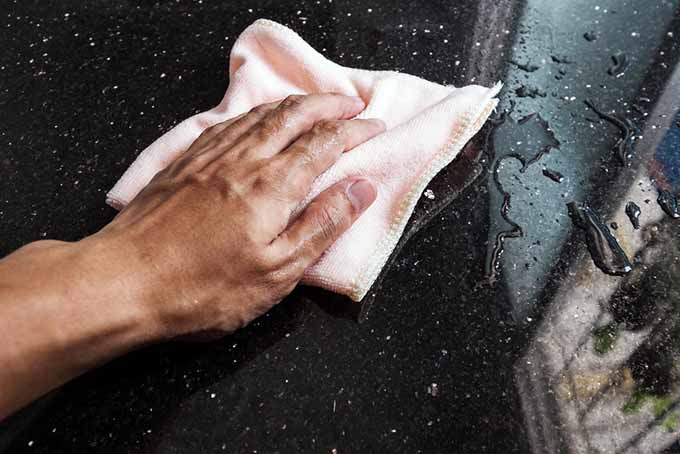
ระยะเวลาการสอบเทียบขึ้นอยู่กับการใช้งานและสภาพแวดล้อมของแผ่นวัด เราขอแนะนำให้ทำการสอบเทียบแผ่นวัดหรืออุปกรณ์เสริมหินแกรนิตที่มีความแม่นยำสูงใหม่ภายในหนึ่งปีนับจากวันที่ซื้อ หากแผ่นวัดพื้นผิวหินแกรนิตมีการใช้งานหนัก อาจแนะนำให้ลดระยะเวลาการสอบเทียบเหลือหกเดือน การตรวจสอบข้อผิดพลาดในการวัดซ้ำทุกเดือนโดยใช้ระดับอิเล็กทรอนิกส์หรืออุปกรณ์ที่คล้ายกัน จะแสดงจุดสึกหรอที่เกิดขึ้น และใช้เวลาเพียงไม่กี่นาทีในการดำเนินการ หลังจากทราบผลการสอบเทียบครั้งแรกแล้ว ระยะเวลาการสอบเทียบอาจขยายหรือลดลงได้ตามที่ระบบคุณภาพภายในของคุณอนุญาตหรือกำหนด
เราสามารถให้บริการเพื่อช่วยตรวจสอบและปรับเทียบแผ่นพื้นผิวหินแกรนิตของคุณได้

มีสาเหตุหลายประการที่อาจทำให้ค่าการสอบเทียบแตกต่างกัน:
- พื้นผิวถูกล้างด้วยสารละลายร้อนหรือเย็นก่อนการสอบเทียบ และไม่ได้ปล่อยให้เวลาผ่านไปนานพอเพื่อให้พื้นผิวกลับสู่สภาพปกติ
- แผ่นโลหะวางอยู่บนฐานที่ไม่เหมาะสม
- การเปลี่ยนแปลงอุณหภูมิ
- ร่าง
- อย่าให้แสงแดดหรือความร้อนจากแหล่งอื่นส่องตรงไปยังพื้นผิวของจาน โปรดตรวจสอบให้แน่ใจว่าแสงไฟจากด้านบนไม่ได้ทำให้พื้นผิวร้อนขึ้น
- ความผันแปรของความแตกต่างของอุณหภูมิในแนวดิ่งระหว่างฤดูหนาวและฤดูร้อน (ถ้าเป็นไปได้ ควรทราบความแตกต่างของอุณหภูมิในแนวดิ่ง ณ เวลาที่ทำการสอบเทียบ)
- แผ่นโลหะไม่ได้ถูกปล่อยให้ปรับสภาพให้เข้าที่อย่างเพียงพอหลังจากจัดส่ง
- การใช้งานอุปกรณ์ตรวจสอบอย่างไม่ถูกต้อง หรือการใช้อุปกรณ์ที่ไม่ได้สอบเทียบ
- การเปลี่ยนแปลงพื้นผิวอันเนื่องมาจากการสึกหรอ
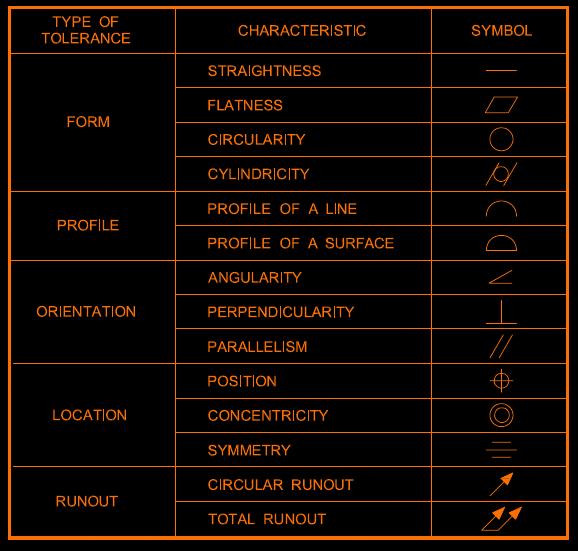
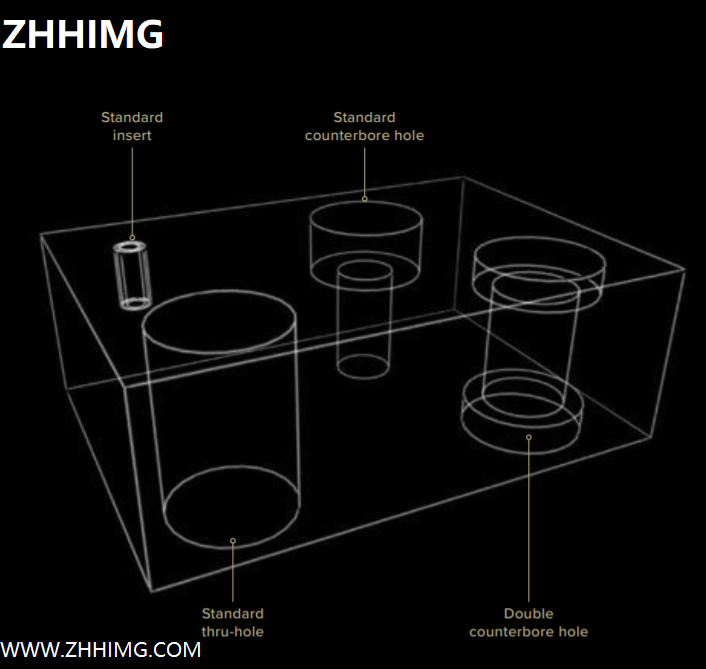
หินแกรนิตที่มีความแม่นยำสูงมีรูเจาะกี่ประเภท?
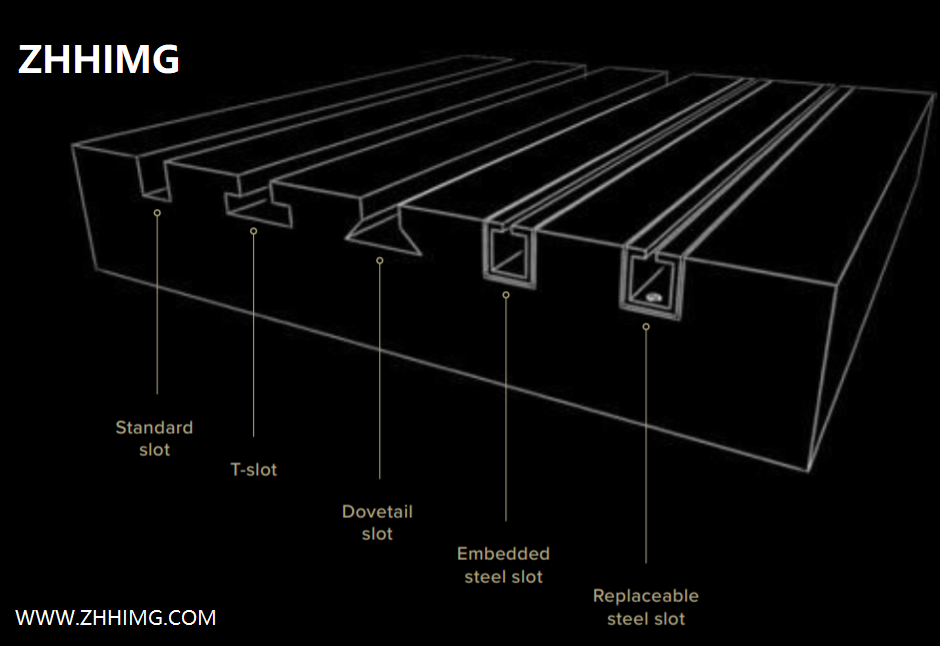
ร่องบนชิ้นส่วนหินแกรนิตที่มีความแม่นยำสูง
สำหรับโรงงาน ห้องตรวจสอบ และห้องปฏิบัติการหลายแห่ง แผ่นหินแกรนิตที่มีความแม่นยำสูงถือเป็นพื้นฐานสำคัญสำหรับการวัดที่ถูกต้องแม่นยำ เนื่องจากทุกการวัดเชิงเส้นขึ้นอยู่กับพื้นผิวอ้างอิงที่แม่นยำซึ่งใช้ในการกำหนดขนาดสุดท้าย แผ่นพื้นผิวจึงเป็นระนาบอ้างอิงที่ดีที่สุดสำหรับการตรวจสอบชิ้นงานและการวางแผนก่อนการกลึง นอกจากนี้ยังเป็นฐานที่เหมาะสำหรับการวัดความสูงและการวัดพื้นผิว ยิ่งไปกว่านั้น ความเรียบ ความเสถียร คุณภาพโดยรวม และฝีมือการผลิตที่ยอดเยี่ยม ทำให้แผ่นพื้นผิวเป็นตัวเลือกที่ดีสำหรับการติดตั้งระบบวัดเชิงกล อิเล็กทรอนิกส์ และเชิงแสงที่ซับซ้อน สำหรับกระบวนการวัดเหล่านี้ จำเป็นอย่างยิ่งที่จะต้องสอบเทียบแผ่นพื้นผิวอยู่เสมอ
การวัดซ้ำและความเรียบ
ทั้งความเรียบและการวัดซ้ำมีความสำคัญอย่างยิ่งต่อการรับประกันความแม่นยำของพื้นผิว ความเรียบสามารถพิจารณาได้ว่าทุกจุดบนพื้นผิวอยู่ภายในระนาบขนานสองระนาบ ได้แก่ ระนาบฐานและระนาบหลังคา การวัดระยะห่างระหว่างระนาบทั้งสองคือความเรียบโดยรวมของพื้นผิว การวัดความเรียบนี้มักมีค่าความคลาดเคลื่อนและอาจรวมถึงการกำหนดเกรดด้วย
ค่าความคลาดเคลื่อนของความเรียบสำหรับเกรดมาตรฐานทั้งสามเกรดนั้น กำหนดไว้ในข้อกำหนดของรัฐบาลกลาง โดยคำนวณจากสูตรต่อไปนี้:
มาตรฐาน DIN, มาตรฐาน GB, มาตรฐาน ASME, มาตรฐาน JJS... แต่ละประเทศมีมาตรฐานที่แตกต่างกัน...
รายละเอียดเพิ่มเติมเกี่ยวกับมาตรฐาน
นอกเหนือจากความเรียบแล้ว ยังต้องมั่นใจได้ถึงความสามารถในการวัดซ้ำได้ การวัดซ้ำคือการวัดความเรียบในบริเวณเฉพาะที่ เป็นการวัดที่ใดก็ได้บนพื้นผิวของแผ่นโลหะ ซึ่งจะได้ผลลัพธ์ที่ซ้ำกันภายในค่าความคลาดเคลื่อนที่กำหนด การควบคุมความเรียบในบริเวณเฉพาะให้มีความคลาดเคลื่อนที่เข้มงวดกว่าความเรียบโดยรวม จะรับประกันการเปลี่ยนแปลงอย่างค่อยเป็นค่อยไปของลักษณะความเรียบของพื้นผิว ซึ่งจะช่วยลดข้อผิดพลาดในบริเวณเฉพาะที่ได้
เพื่อให้มั่นใจว่าแผ่นหินแกรนิตพื้นผิวตรงตามข้อกำหนดทั้งด้านความเรียบและความแม่นยำในการวัดซ้ำ ผู้ผลิตแผ่นหินแกรนิตพื้นผิวควรใช้ข้อกำหนดของรัฐบาลกลาง GGG-P-463c เป็นพื้นฐานสำหรับข้อกำหนดของตน มาตรฐานนี้กล่าวถึงความแม่นยำในการวัดซ้ำ คุณสมบัติของวัสดุหินแกรนิตพื้นผิว การตกแต่งพื้นผิว ตำแหน่งจุดรองรับ ความแข็ง วิธีการตรวจสอบที่ยอมรับได้ และการติดตั้งเม็ดมีดเกลียว
การตรวจสอบความแม่นยำของแผ่น
ด้วยการปฏิบัติตามคำแนะนำง่ายๆ เพียงไม่กี่ข้อ การลงทุนในแผ่นพื้นผิวหินแกรนิตควรใช้งานได้นานหลายปี ความถี่ในการตรวจสอบความแม่นยำของแผ่นพื้นผิวจะแตกต่างกันไป ขึ้นอยู่กับการใช้งานแผ่น สภาพแวดล้อมในโรงงาน และความแม่นยำที่ต้องการ โดยทั่วไปแล้ว ควรทำการปรับเทียบแผ่นใหม่ให้สมบูรณ์ภายในหนึ่งปีนับจากวันที่ซื้อ หากใช้งานแผ่นบ่อย ควรลดช่วงเวลาดังกล่าวเหลือหกเดือน
ก่อนที่แผ่นผิวหน้าจะสึกหรอเกินข้อกำหนดเรื่องความเรียบโดยรวม จะเริ่มเห็นเสาที่สึกหรอหรือเป็นคลื่น การตรวจสอบข้อผิดพลาดในการวัดซ้ำทุกเดือนโดยใช้เกจวัดแบบอ่านค่าซ้ำจะช่วยระบุจุดที่สึกหรอได้ เกจวัดแบบอ่านค่าซ้ำเป็นเครื่องมือที่มีความแม่นยำสูง ตรวจจับข้อผิดพลาดเฉพาะจุด และสามารถแสดงผลบนเครื่องขยายสัญญาณอิเล็กทรอนิกส์ที่มีกำลังขยายสูงได้
โปรแกรมการตรวจสอบที่มีประสิทธิภาพควรรวมถึงการตรวจสอบอย่างสม่ำเสมอด้วยเครื่องวัดความเรียบอัตโนมัติ (autocollimator) ซึ่งให้การสอบเทียบความเรียบโดยรวมที่สามารถตรวจสอบย้อนกลับได้ถึงสถาบันมาตรฐานและเทคโนโลยีแห่งชาติ (NIST) การสอบเทียบอย่างครอบคลุมโดยผู้ผลิตหรือบริษัทอิสระเป็นสิ่งจำเป็นเป็นระยะๆ
ความแปรผันระหว่างการสอบเทียบ
ในบางกรณี อาจมีความคลาดเคลื่อนระหว่างการสอบเทียบแผ่นพื้นผิว บางครั้งปัจจัยต่างๆ เช่น การเปลี่ยนแปลงของพื้นผิวอันเนื่องมาจากการสึกหรอ การใช้งานอุปกรณ์ตรวจสอบที่ไม่ถูกต้อง หรือการใช้อุปกรณ์ที่ไม่ได้สอบเทียบ อาจเป็นสาเหตุของความคลาดเคลื่อนเหล่านี้ อย่างไรก็ตาม ปัจจัยที่พบได้บ่อยที่สุดสองประการคือ อุณหภูมิและวัสดุรองรับ
หนึ่งในตัวแปรที่สำคัญที่สุดคืออุณหภูมิ ตัวอย่างเช่น พื้นผิวอาจถูกล้างด้วยสารละลายร้อนหรือเย็นก่อนการสอบเทียบและไม่ได้ปล่อยให้เวลาผ่านไปนานพอที่จะปรับอุณหภูมิให้กลับสู่สภาวะปกติ สาเหตุอื่นๆ ที่ทำให้เกิดการเปลี่ยนแปลงของอุณหภูมิ ได้แก่ กระแสลมเย็นหรือร้อน แสงแดดโดยตรง แสงไฟจากด้านบน หรือแหล่งความร้อนอื่นๆ ที่แผ่รังสีลงบนพื้นผิวของแผ่นโลหะ
นอกจากนี้ ยังอาจมีความผันแปรของอุณหภูมิในแนวตั้งระหว่างฤดูหนาวและฤดูร้อน ในบางกรณี แผ่นวัดอาจไม่มีเวลาเพียงพอที่จะปรับอุณหภูมิให้คงที่หลังจากขนส่ง จึงควรบันทึกอุณหภูมิในแนวตั้งขณะทำการสอบเทียบ
สาเหตุทั่วไปอีกประการหนึ่งที่ทำให้ค่าการสอบเทียบคลาดเคลื่อนคือแผ่นฐานที่ไม่ได้รับการรองรับอย่างเหมาะสม แผ่นฐานควรได้รับการรองรับที่สามจุด โดยจุดรองรับที่เหมาะสมควรอยู่ห่างจากปลายทั้งสองข้างของแผ่นฐานเข้ามาประมาณ 20% ของความยาว จุดรองรับสองจุดควรอยู่ห่างจากด้านยาวเข้ามาประมาณ 20% ของความกว้าง และจุดรองรับที่เหลือควรอยู่ตรงกลาง
บนพื้นผิวที่ไม่เรียบ ควรจะวางแผ่นโลหะได้อย่างมั่นคงเพียงแค่สามจุดเท่านั้น การพยายามรองรับแผ่นโลหะมากกว่าสามจุดจะทำให้แผ่นโลหะได้รับการรองรับจากจุดสามจุดที่แตกต่างกัน ซึ่งจะไม่ใช่จุดสามจุดเดียวกับที่ใช้ในการผลิต ทำให้เกิดข้อผิดพลาดเนื่องจากแผ่นโลหะจะโก่งตัวเพื่อปรับให้เข้ากับการรองรับแบบใหม่ ควรพิจารณาใช้ขาตั้งเหล็กที่มีคานรองรับที่ออกแบบมาให้ตรงกับจุดรองรับที่เหมาะสม โดยทั่วไปแล้ว ผู้ผลิตแผ่นโลหะจะมีจำหน่ายขาตั้งสำหรับวัตถุประสงค์นี้
หากแผ่นฐานได้รับการรองรับอย่างเหมาะสม การปรับระดับอย่างแม่นยำจะจำเป็นก็ต่อเมื่อแอปพลิเคชันระบุไว้เท่านั้น การปรับระดับไม่จำเป็นสำหรับการรักษาความแม่นยำของแผ่นฐานที่ได้รับการรองรับอย่างเหมาะสม
ยืดอายุการใช้งานของแผ่นโลหะ
การปฏิบัติตามคำแนะนำบางประการจะช่วยลดการสึกหรอของแผ่นหินแกรนิต และในที่สุดจะช่วยยืดอายุการใช้งานได้
ประการแรก สิ่งสำคัญคือต้องรักษาความสะอาดของแผ่นวัด ฝุ่นละอองที่ฟุ้งกระจายในอากาศมักเป็นสาเหตุหลักของการสึกหรอของแผ่นวัด เนื่องจากมันมีแนวโน้มที่จะฝังตัวอยู่ในชิ้นงานและพื้นผิวสัมผัสของเครื่องมือวัด
นอกจากนี้ การคลุมแผ่นโลหะเพื่อป้องกันฝุ่นละอองและความเสียหายก็มีความสำคัญเช่นกัน การคลุมแผ่นโลหะเมื่อไม่ได้ใช้งานจะช่วยยืดอายุการใช้งานได้
ควรหมุนแผ่นวัดเป็นระยะ เพื่อไม่ให้บริเวณใดบริเวณหนึ่งถูกใช้งานมากเกินไป นอกจากนี้ แนะนำให้เปลี่ยนแผ่นสัมผัสเหล็กบนเครื่องวัดด้วยแผ่นคาร์ไบด์
ควรหลีกเลี่ยงการวางอาหารหรือเครื่องดื่มลงบนจานโดยตรง เพราะเครื่องดื่มหลายชนิดมีกรดคาร์บอนิกหรือกรดฟอสฟอริก ซึ่งสามารถละลายแร่ธาตุที่อ่อนนุ่มบนจานและทำให้เกิดรอยบุ๋มเล็กๆ บนพื้นผิวได้
จะกลับไปติดยาอีกได้ที่ไหน
เมื่อแผ่นหินแกรนิตจำเป็นต้องได้รับการปรับผิวใหม่ ควรพิจารณาว่าควรให้ดำเนินการที่สถานที่ติดตั้งหรือที่โรงงานสอบเทียบ โดยทั่วไปแล้วควรให้โรงงานหรือสถานที่เฉพาะทางทำการปรับผิวใหม่ อย่างไรก็ตาม หากแผ่นหินสึกหรอไม่มากนัก โดยปกติอยู่ในช่วงความคลาดเคลื่อนที่กำหนดไม่เกิน 0.001 นิ้ว ก็สามารถปรับผิวใหม่ที่สถานที่ติดตั้งได้ แต่หากแผ่นหินสึกหรอจนเกิน 0.001 นิ้ว หรือมีรอยบุ๋มหรือรอยขีดข่วนมาก ควรส่งไปที่โรงงานเพื่อทำการเจียรก่อนทำการปรับผิวใหม่
ศูนย์สอบเทียบมีอุปกรณ์และการตั้งค่าจากโรงงานที่ให้สภาวะที่เหมาะสมที่สุดสำหรับการสอบเทียบแผ่นพิมพ์อย่างถูกต้อง และการแก้ไขงานหากจำเป็น
ควรใช้ความระมัดระวังอย่างยิ่งในการเลือกช่างเทคนิคสอบเทียบและปรับพื้นผิวหน้างาน ควรสอบถามถึงการรับรองและตรวจสอบว่าอุปกรณ์ที่ช่างเทคนิคจะใช้มีการสอบเทียบที่ตรวจสอบย้อนกลับได้ ประสบการณ์ก็เป็นปัจจัยสำคัญเช่นกัน เนื่องจากต้องใช้เวลาหลายปีในการเรียนรู้วิธีการขัดหินแกรนิตที่มีความแม่นยำสูงอย่างถูกต้อง
การวัดที่สำคัญเริ่มต้นด้วยแผ่นหินแกรนิตที่มีความแม่นยำสูงเป็นฐานอ้างอิง การรับรองความน่าเชื่อถือโดยใช้แผ่นพื้นผิวที่สอบเทียบอย่างถูกต้อง จะช่วยให้ผู้ผลิตมีเครื่องมือที่จำเป็นอย่างยิ่งสำหรับการวัดที่เชื่อถือได้และชิ้นส่วนที่มีคุณภาพดีขึ้นQ
รายการตรวจสอบความคลาดเคลื่อนของการสอบเทียบ
1. พื้นผิวถูกล้างด้วยสารละลายร้อนหรือเย็นก่อนการสอบเทียบ และไม่ได้ปล่อยให้เวลาผ่านไปนานพอเพื่อให้พื้นผิวกลับสู่สภาวะปกติ
2. แผ่นโลหะวางอยู่บนฐานที่ไม่เหมาะสม
3. การเปลี่ยนแปลงอุณหภูมิ
4. ฉบับร่าง
5. แสงแดดโดยตรงหรือความร้อนจากแหล่งอื่น ๆ ที่ส่องลงบนพื้นผิวของจาน โปรดตรวจสอบให้แน่ใจว่าแสงไฟจากด้านบนไม่ได้ทำให้พื้นผิวร้อนขึ้น
6. ความผันแปรของความแตกต่างของอุณหภูมิในแนวดิ่งระหว่างฤดูหนาวและฤดูร้อน หากเป็นไปได้ ควรทราบความแตกต่างของอุณหภูมิในแนวดิ่ง ณ เวลาที่ทำการสอบเทียบ
7. แผ่นโลหะไม่ได้ถูกปล่อยให้ปรับสภาพให้เข้าที่อย่างเพียงพอหลังจากขนส่ง
8. การใช้งานอุปกรณ์ตรวจสอบอย่างไม่ถูกต้อง หรือการใช้อุปกรณ์ที่ไม่ได้สอบเทียบ
9. การเปลี่ยนแปลงของพื้นผิวอันเนื่องมาจากการสึกหรอ
เคล็ดลับด้านเทคโนโลยี
- เนื่องจากการวัดเชิงเส้นทุกครั้งขึ้นอยู่กับพื้นผิวอ้างอิงที่แม่นยำซึ่งใช้ในการกำหนดขนาดสุดท้าย แผ่นพื้นผิวจึงเป็นระนาบอ้างอิงที่ดีที่สุดสำหรับการตรวจสอบชิ้นงานและการวางแผนก่อนการกลึง
- การควบคุมความเรียบของพื้นที่เฉพาะจุดให้มีความคลาดเคลื่อนที่เข้มงวดกว่าความเรียบโดยรวม จะช่วยให้เกิดการเปลี่ยนแปลงความเรียบของพื้นผิวอย่างค่อยเป็นค่อยไป ซึ่งจะช่วยลดข้อผิดพลาดเฉพาะจุดได้
- โปรแกรมการตรวจสอบที่มีประสิทธิภาพควรรวมถึงการตรวจสอบอย่างสม่ำเสมอด้วยเครื่องวัดความเรียบอัตโนมัติ (autocollimator) ซึ่งให้การสอบเทียบความเรียบโดยรวมที่สามารถตรวจสอบย้อนกลับไปยังหน่วยงานตรวจสอบระดับชาติได้
ในส่วนประกอบของหินแกรนิตนั้น กว่า 90% เป็นเฟลด์สปาร์และควอตซ์ โดยเฟลด์สปาร์มีปริมาณมากที่สุด เฟลด์สปาร์มักมีสีขาว เทา และแดงอมชมพู ส่วนควอตซ์ส่วนใหญ่มักไม่มีสีหรือมีสีขาวอมเทา ซึ่งเป็นสีพื้นฐานของหินแกรนิต เฟลด์สปาร์และควอตซ์เป็นแร่แข็ง และยากที่จะตัดหรือเคลื่อนย้ายด้วยมีดเหล็ก สำหรับจุดด่างดำในหินแกรนิตนั้น ส่วนใหญ่เป็นไมกาดำ แต่ก็มีแร่ชนิดอื่นอยู่บ้าง แม้ว่าไบโอไทต์จะค่อนข้างอ่อน แต่ก็มีความสามารถในการต้านทานแรงกดได้ดี และในขณะเดียวกันก็มีปริมาณน้อยในหินแกรนิต มักน้อยกว่า 10% นี่คือคุณสมบัติทางวัสดุที่ทำให้หินแกรนิตมีความแข็งแรงเป็นพิเศษ
อีกเหตุผลหนึ่งที่ทำให้หินแกรนิตมีความแข็งแรงคือ อนุภาคแร่ของมันยึดติดกันอย่างแน่นหนาและฝังตัวอยู่ภายในกัน รูพรุนมักมีปริมาณน้อยกว่า 1% ของปริมาตรทั้งหมดของหิน ทำให้หินแกรนิตสามารถทนต่อแรงกดดันสูงและไม่สามารถซึมผ่านความชื้นได้ง่าย
ชิ้นส่วนหินแกรนิตทำจากหินที่ไม่เป็นสนิม ทนต่อกรดและด่าง ทนต่อการสึกหรอได้ดี และมีอายุการใช้งานยาวนาน ไม่จำเป็นต้องบำรุงรักษาเป็นพิเศษ ชิ้นส่วนหินแกรนิตที่มีความแม่นยำสูงส่วนใหญ่ใช้ในอุตสาหกรรมการผลิตเครื่องมือ ดังนั้นจึงเรียกว่าชิ้นส่วนหินแกรนิตที่มีความแม่นยำสูงหรือชิ้นส่วนหินแกรนิต คุณลักษณะของชิ้นส่วนหินแกรนิตที่มีความแม่นยำสูงโดยพื้นฐานแล้วเหมือนกับแพลตฟอร์มหินแกรนิต บทนำเกี่ยวกับเครื่องมือและการวัดชิ้นส่วนหินแกรนิตที่มีความแม่นยำสูง: เทคโนโลยีการกลึงที่แม่นยำและการกลึงขนาดเล็กเป็นทิศทางการพัฒนาที่สำคัญของอุตสาหกรรมการผลิตเครื่องจักร และได้กลายเป็นตัวชี้วัดที่สำคัญในการวัดระดับเทคโนโลยีขั้นสูง การพัฒนาเทคโนโลยีล้ำสมัยและอุตสาหกรรมการป้องกันประเทศนั้นแยกไม่ออกจากเทคโนโลยีการกลึงที่แม่นยำและการกลึงขนาดเล็ก ชิ้นส่วนหินแกรนิตสามารถเลื่อนได้อย่างราบรื่นในการวัดโดยไม่ติดขัด การวัดพื้นผิวงาน รอยขีดข่วนทั่วไปไม่ส่งผลต่อความแม่นยำในการวัด ชิ้นส่วนหินแกรนิตจำเป็นต้องได้รับการออกแบบและผลิตตามความต้องการของฝ่ายผู้ใช้งาน
ขอบเขตการใช้งาน:
อย่างที่เราทราบกันดีว่า ปัจจุบันเครื่องจักรและอุปกรณ์ต่างๆ เลือกใช้ชิ้นส่วนหินแกรนิตที่มีความแม่นยำสูงมากขึ้นเรื่อยๆ
ชิ้นส่วนหินแกรนิตใช้สำหรับงานด้านการเคลื่อนที่แบบไดนามิก มอเตอร์เชิงเส้น เครื่องวัดพิกัดสามมิติ (CMM) เครื่อง CNC เครื่องจักรเลเซอร์...
ยินดีต้อนรับ โปรดติดต่อเราเพื่อขอข้อมูลเพิ่มเติม
อุปกรณ์วัดและชิ้นส่วนกลไกที่ทำจากหินแกรนิตนั้น ผลิตจากหินแกรนิตดำจี่หนานคุณภาพสูง เนื่องจากมีความแม่นยำสูง อายุการใช้งานยาวนาน มีเสถียรภาพดี และทนต่อการกัดกร่อน จึงมีการใช้งานเพิ่มมากขึ้นในการตรวจสอบผลิตภัณฑ์ของอุตสาหกรรมสมัยใหม่ และในสาขาวิทยาศาสตร์ต่างๆ เช่น วิศวกรรมเครื่องกล การบินและอวกาศ และงานวิจัยทางวิทยาศาสตร์
ข้อดี
----แข็งกว่าเหล็กหล่อถึงสองเท่า;
----การเปลี่ยนแปลงขนาดเพียงเล็กน้อยเกิดจากการเปลี่ยนแปลงของอุณหภูมิ
----ปราศจากการบิดงอ จึงไม่ทำให้การทำงานหยุดชะงัก;
----ปราศจากเสี้ยนหรือส่วนที่ยื่นออกมา เนื่องจากโครงสร้างเม็ดละเอียดและการยึดเกาะต่ำ ทำให้พื้นผิวเรียบลื่นตลอดอายุการใช้งาน และไม่ก่อให้เกิดความเสียหายต่อชิ้นส่วนหรือเครื่องมืออื่นๆ
----ใช้งานกับวัสดุแม่เหล็กได้อย่างราบรื่นไร้ปัญหา;
อายุการใช้งานยาวนานและไม่เป็นสนิม ส่งผลให้ค่าบำรุงรักษาต่ำ
แผ่นหินแกรนิตที่มีความแม่นยำสูงได้รับการขัดเงาอย่างแม่นยำเพื่อให้ได้ความเรียบระดับสูงเพื่อความถูกต้อง และใช้เป็นฐานสำหรับการติดตั้งระบบวัดเชิงกล อิเล็กทรอนิกส์ และเชิงแสงที่ซับซ้อน
คุณสมบัติเฉพาะบางประการของแผ่นหินแกรนิต:
ความแข็งสม่ำเสมอ
มีความแม่นยำภายใต้สภาวะการรับน้ำหนัก
ดูดซับแรงสั่นสะเทือน;
ทำความสะอาดง่าย;
ทนทานต่อการพันกัน;
ความพรุนต่ำ;
ไม่ทำให้เกิดรอยขีดข่วน;
ไม่เป็นแม่เหล็ก
ข้อดีของแผ่นพื้นผิวหินแกรนิต
ประการแรก หินที่ผ่านการบ่มตามธรรมชาติเป็นเวลานานจะมีโครงสร้างที่สม่ำเสมอ มีค่าสัมประสิทธิ์ต่ำสุด ความเครียดภายในหายไปอย่างสมบูรณ์ ไม่เกิดการเสียรูป ดังนั้นจึงมีความแม่นยำสูง
ประการที่สอง จะไม่มีรอยขีดข่วน ไม่ว่าจะอยู่ในสภาวะอุณหภูมิคงที่หรือไม่ก็ตาม แม้ในอุณหภูมิห้องก็สามารถรักษาความแม่นยำในการวัดอุณหภูมิได้
ประการที่สาม ไม่มีการใช้แม่เหล็ก การวัดจึงเคลื่อนไหวได้อย่างราบรื่น ไม่มีเสียงเอี๊ยดอ๊าด ไม่ได้รับผลกระทบจากความชื้น และพื้นผิวก็คงที่
ประการที่สี่ ความแข็งแกร่งดี ความแข็งสูง และทนทานต่อการสึกหรอได้ดี
ประการที่ห้า ไม่กลัวกรด ด่าง หรือการกัดกร่อน ไม่เป็นสนิม ไม่ต้องทาสี ไม่เกาะติดฝุ่นละอองขนาดเล็ก บำรุงรักษาง่าย อายุการใช้งานยาวนาน
เหตุใดจึงควรเลือกฐานหินแกรนิตแทนฐานเครื่องเหล็กหล่อ?
1. ฐานเครื่องจักรที่ทำจากหินแกรนิตสามารถรักษาความแม่นยำได้สูงกว่าฐานเครื่องจักรที่ทำจากเหล็กหล่อ ฐานเครื่องจักรที่ทำจากเหล็กหล่อได้รับผลกระทบจากอุณหภูมิและความชื้นได้ง่าย แต่ฐานเครื่องจักรที่ทำจากหินแกรนิตจะไม่ได้รับผลกระทบ
2. เมื่อเปรียบเทียบฐานเครื่องจักรที่ทำจากหินแกรนิตกับฐานเครื่องจักรที่ทำจากเหล็กหล่อที่มีขนาดเท่ากัน ฐานเครื่องจักรที่ทำจากหินแกรนิตจะคุ้มค่ากว่าฐานเครื่องจักรที่ทำจากเหล็กหล่อ
3. ฐานเครื่องจักรที่ทำจากหินแกรนิตชนิดพิเศษนั้นง่ายต่อการตกแต่งมากกว่าฐานเครื่องจักรที่ทำจากเหล็กหล่อ
แผ่นหินแกรนิตเป็นเครื่องมือสำคัญในห้องปฏิบัติการตรวจสอบทั่วประเทศ พื้นผิวที่เรียบสนิทและได้มาตรฐานของแผ่นหินแกรนิตช่วยให้ผู้ตรวจสอบสามารถใช้เป็นฐานอ้างอิงสำหรับการตรวจสอบชิ้นส่วนและการสอบเทียบเครื่องมือได้ หากปราศจากความเสถียรของแผ่นหินแกรนิต ชิ้นส่วนที่มีความคลาดเคลื่อนต่ำมากในสาขาเทคโนโลยีและการแพทย์ต่างๆ จะผลิตได้ยากขึ้นมาก หรืออาจเป็นไปไม่ได้เลยที่จะผลิตได้อย่างถูกต้อง แน่นอนว่า ในการใช้แผ่นหินแกรนิตเพื่อสอบเทียบและตรวจสอบวัสดุและเครื่องมืออื่นๆ ความแม่นยำของหินแกรนิตเองจะต้องได้รับการประเมิน ผู้ใช้สามารถสอบเทียบแผ่นหินแกรนิตเพื่อให้แน่ใจในความแม่นยำได้
ทำความสะอาดแผ่นหินแกรนิตก่อนทำการปรับเทียบ เทน้ำยาทำความสะอาดแผ่นพื้นผิวลงบนผ้าสะอาดและนุ่มเล็กน้อย แล้วเช็ดพื้นผิวหินแกรนิต จากนั้นเช็ดน้ำยาทำความสะอาดออกจากแผ่นพื้นผิวด้วยผ้าแห้งทันที อย่าปล่อยให้น้ำยาทำความสะอาดแห้งเองตามธรรมชาติ
วางเกจวัดซ้ำไว้ที่กึ่งกลางของแผ่นหินแกรนิต
ตั้งค่าเครื่องวัดซ้ำให้เป็นศูนย์โดยเทียบกับพื้นผิวของแผ่นหินแกรนิต
ค่อยๆ เลื่อนเครื่องวัดไปตามพื้นผิวหินแกรนิต สังเกตตัวบ่งชี้ของเครื่องวัดและบันทึกค่าสูงสุดของการเปลี่ยนแปลงความสูงขณะที่คุณเลื่อนเครื่องมือไปบนแผ่นหิน
เปรียบเทียบความเรียบของพื้นผิวแผ่นหินกับค่าความคลาดเคลื่อนที่ยอมรับได้สำหรับแผ่นหินของคุณ ซึ่งแตกต่างกันไปตามขนาดของแผ่นหินและระดับความเรียบของหินแกรนิต โปรดตรวจสอบข้อกำหนดของรัฐบาลกลาง GGG-P-463c (ดูในส่วนแหล่งข้อมูล) เพื่อตรวจสอบว่าแผ่นหินของคุณตรงตามข้อกำหนดด้านความเรียบสำหรับขนาดและระดับความเรียบของแผ่นหินหรือไม่ ค่าความเรียบที่วัดได้จากความแตกต่างระหว่างจุดสูงสุดและจุดต่ำสุดบนแผ่นหิน คือค่าความเรียบของแผ่นหินนั้น
ตรวจสอบว่าความแปรผันของความลึกที่มากที่สุดบนพื้นผิวของแผ่นโลหะอยู่ในเกณฑ์ความสม่ำเสมอตามข้อกำหนดสำหรับแผ่นโลหะขนาดและเกรดนั้นๆ ปรึกษาข้อกำหนดของรัฐบาลกลาง GGG-P-463c (ดูในส่วนแหล่งข้อมูล) เพื่อตรวจสอบว่าแผ่นโลหะของคุณตรงตามข้อกำหนดความสม่ำเสมอสำหรับขนาดของมันหรือไม่ ปฏิเสธแผ่นโลหะหากมีแม้แต่จุดเดียวที่ไม่ตรงตามข้อกำหนดความสม่ำเสมอ
หยุดใช้แผ่นหินแกรนิตที่ไม่ได้มาตรฐานตามข้อกำหนดของรัฐบาลกลาง ส่งคืนแผ่นดังกล่าวให้กับผู้ผลิตหรือบริษัทรับทำพื้นผิวหินแกรนิต เพื่อทำการขัดเงาใหม่ให้ตรงตามข้อกำหนด
เคล็ดลับ
ควรทำการสอบเทียบอย่างเป็นทางการอย่างน้อยปีละครั้ง แม้ว่าแผ่นพื้นผิวหินแกรนิตที่ใช้งานหนักควรได้รับการสอบเทียบถี่ขึ้นก็ตาม
การสอบเทียบอย่างเป็นทางการที่สามารถบันทึกได้ในสภาพแวดล้อมการผลิตหรือการตรวจสอบ มักดำเนินการโดยฝ่ายประกันคุณภาพหรือผู้ให้บริการสอบเทียบภายนอก แม้ว่าใครก็ตามสามารถใช้เกจวัดซ้ำเพื่อตรวจสอบแผ่นพื้นผิวอย่างไม่เป็นทางการก่อนใช้งานได้ก็ตาม
ประวัติศาสตร์ยุคแรกของแผ่นหินแกรนิตบนพื้นผิว
ก่อนสงครามโลกครั้งที่สอง ผู้ผลิตใช้แผ่นเหล็กสำหรับตรวจสอบขนาดของชิ้นส่วนต่างๆ ในช่วงสงครามโลกครั้งที่สอง ความต้องการเหล็กเพิ่มขึ้นอย่างมาก และแผ่นเหล็กจำนวนมากถูกหลอมละลาย จึงจำเป็นต้องหาวัสดุอื่นมาทดแทน และหินแกรนิตก็กลายเป็นวัสดุที่ได้รับเลือกเนื่องจากมีคุณสมบัติทางด้านการวัดที่ดีเยี่ยม
ข้อดีหลายประการของหินแกรนิตเมื่อเทียบกับเหล็กเริ่มปรากฏชัด หินแกรนิตแข็งกว่า แม้ว่าจะเปราะกว่าและบิ่นได้ง่ายกว่าก็ตาม คุณสามารถขัดหินแกรนิตให้เรียบเนียนได้มากกว่าและเร็วกว่าเหล็ก นอกจากนี้ หินแกรนิตยังมีคุณสมบัติที่พึงประสงค์คือการขยายตัวทางความร้อนต่ำกว่าเหล็ก ยิ่งไปกว่านั้น หากแผ่นเหล็กจำเป็นต้องซ่อมแซม จะต้องให้ช่างฝีมือที่ใช้ทักษะในการซ่อมแซมเครื่องมือกลทำการขูดด้วยมือ
อนึ่ง แผ่นเหล็กเคลือบผิวบางชนิดยังคงใช้งานอยู่ในปัจจุบัน
คุณสมบัติทางมาตรวิทยาของแผ่นหินแกรนิต
หินแกรนิตเป็นหินอัคนีที่เกิดจากการระเบิดของภูเขาไฟ ในขณะที่หินอ่อนเป็นหินปูนที่ผ่านการเปลี่ยนแปลงทางธรณีวิทยา สำหรับการใช้งานด้านมาตรวิทยา หินแกรนิตที่เลือกควรเป็นไปตามข้อกำหนดเฉพาะที่ระบุไว้ในข้อกำหนดของรัฐบาลกลาง GGG-P-463c ซึ่งต่อไปนี้จะเรียกว่า Fed Specs และโดยเฉพาะอย่างยิ่งส่วนที่ 3.1 3.1 ในบรรดาข้อกำหนดของ Fed Specs หินแกรนิตควรมีเนื้อละเอียดถึงปานกลาง
หินแกรนิตเป็นวัสดุที่แข็ง แต่ความแข็งของมันแตกต่างกันไปตามหลายสาเหตุ ช่างเทคนิคผู้เชี่ยวชาญด้านแผ่นหินแกรนิตสามารถประเมินความแข็งได้จากสี ซึ่งเป็นตัวบ่งชี้ปริมาณควอตซ์ ความแข็งของหินแกรนิตเป็นคุณสมบัติที่กำหนดโดยปริมาณควอตซ์และการขาดแคลนไมกา หินแกรนิตสีแดงและสีชมพูมักจะแข็งที่สุด สีเทามีความแข็งปานกลาง และสีดำอ่อนที่สุด
ค่าโมดูลัสความยืดหยุ่นของยัง (Young's Modulus of Elasticity) ใช้เพื่อแสดงความยืดหยุ่นหรือบ่งชี้ความแข็งของหิน หินแกรนิตสีชมพูมีค่าเฉลี่ย 3-5 คะแนน สีเทา 5-7 คะแนน และสีดำ 7-10 คะแนน ยิ่งตัวเลขน้อย หินแกรนิตก็ยิ่งแข็ง ยิ่งตัวเลขมาก หินแกรนิตก็ยิ่งอ่อนและยืดหยุ่น การทราบความแข็งของหินแกรนิตมีความสำคัญเมื่อเลือกความหนาที่ต้องการสำหรับเกรดความคลาดเคลื่อน และน้ำหนักของชิ้นส่วนและเครื่องมือวัดที่วางอยู่บนนั้น
ในสมัยก่อนที่ยังมีช่างเครื่องตัวจริง ซึ่งรู้จักกันดีจากสมุดตารางตรีโกณมิติในกระเป๋าเสื้อ หินแกรนิตสีดำถือว่า "ดีที่สุด" คำว่า "ดีที่สุด" ในที่นี้หมายถึงชนิดที่ทนทานต่อการสึกหรอมากที่สุดหรือมีความแข็งที่สุด ข้อเสียอย่างหนึ่งคือหินแกรนิตที่แข็งกว่ามักจะบิ่นหรือเป็นรอยได้ง่ายกว่า ช่างเครื่องเหล่านั้นเชื่อมั่นว่าหินแกรนิตสีดำดีที่สุดมาก จนผู้ผลิตหินแกรนิตสีชมพูบางรายนำหินแกรนิตสีชมพูมาย้อมสีให้เป็นสีดำ
ฉันเคยเห็นกับตาตัวเองว่าแผ่นหินแกรนิตแผ่นหนึ่งถูกรถยกทำตกขณะเคลื่อนย้ายจากที่เก็บ แผ่นหินกระแทกพื้นแล้วแตกเป็นสองท่อน เผยให้เห็นสีชมพูที่แท้จริง โปรดใช้ความระมัดระวังหากวางแผนจะซื้อหินแกรนิตสีดำจากประเทศจีน เราขอแนะนำให้คุณนำเงินไปใช้จ่ายอย่างอื่นดีกว่า แผ่นหินแกรนิตอาจมีความแข็งแตกต่างกันไป ส่วนที่เป็นควอตซ์อาจแข็งกว่าส่วนอื่นๆ ของพื้นผิวมาก ชั้นของหินแกบโบรสีดำอาจทำให้บริเวณนั้นอ่อนตัวลง ช่างซ่อมพื้นผิวหินแกรนิตที่มีความรู้และประสบการณ์จะรู้วิธีจัดการกับบริเวณที่อ่อนตัวเหล่านี้
เกรดแผ่นผิวเรียบ
แผ่นโลหะผิวเรียบมีสี่เกรด ได้แก่ เกรดห้องปฏิบัติการ AA และ A เกรดตรวจสอบห้อง B และเกรดสำหรับโรงงาน เกรด AA และ A มีความเรียบที่สุด โดยมีค่าความคลาดเคลื่อนของความเรียบดีกว่า 0.00001 นิ้ว สำหรับแผ่นเกรด AA ส่วนเกรดสำหรับโรงงานนั้นมีความเรียบน้อยที่สุด และตามชื่อที่บ่งบอก คือเหมาะสำหรับใช้ในห้องเครื่องมือ ในขณะที่เกรด AA, เกรด A และเกรด B เหมาะสำหรับใช้ในห้องปฏิบัติการตรวจสอบหรือควบคุมคุณภาพ
Pการทดสอบ Roper สำหรับการสอบเทียบแผ่นพื้นผิว
ผมบอกลูกค้าเสมอว่า ผมสามารถดึงเด็กอายุ 10 ขวบคนไหนก็ได้จากโบสถ์ของผมมาสอนวิธีการทดสอบแผ่นทดสอบได้ภายในเวลาไม่กี่วัน มันไม่ยาก เพียงแต่ต้องใช้เทคนิคบางอย่างเพื่อให้ทำได้อย่างรวดเร็ว ซึ่งเป็นเทคนิคที่เรียนรู้ได้จากเวลาและการฝึกฝนซ้ำๆ ผมขอเน้นย้ำว่า มาตรฐาน Fed Spec GGG-P-463c ไม่ใช่ขั้นตอนการสอบเทียบ! เราจะพูดถึงเรื่องนั้นในภายหลัง
ตามข้อกำหนดของ Fed Specs การสอบเทียบความเรียบโดยรวม (ค่าเฉลี่ยของแผ่น) และการตรวจสอบความสามารถในการทำซ้ำ (การสึกหรอเฉพาะจุด) เป็นสิ่งจำเป็น ยกเว้นแผ่นขนาดเล็กที่ต้องการเพียงการตรวจสอบความสามารถในการทำซ้ำเท่านั้น
นอกจากนี้ การทดสอบการไล่ระดับอุณหภูมิก็มีความสำคัญไม่แพ้การทดสอบอื่นๆ (ดูค่า Delta T ด้านล่าง)
รูปที่ 1
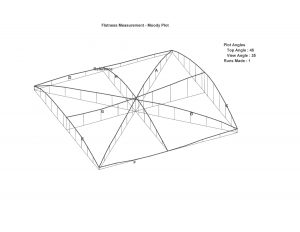
การทดสอบความเรียบมี 4 วิธีที่ได้รับการรับรอง ได้แก่ ระดับอิเล็กทรอนิกส์, การวัดมุมอัตโนมัติ, เลเซอร์ และอุปกรณ์ที่เรียกว่าเครื่องระบุตำแหน่งระนาบ เราใช้เฉพาะระดับอิเล็กทรอนิกส์เท่านั้น เนื่องจากเป็นวิธีที่แม่นยำและรวดเร็วที่สุดด้วยเหตุผลหลายประการ
เลเซอร์และออโตคอลลิเมเตอร์ใช้ลำแสงตรงมากเป็นตัวอ้างอิง การวัดความตรงของแผ่นหินแกรนิตทำได้โดยการเปรียบเทียบความแปรผันของระยะห่างระหว่างแผ่นพื้นผิวกับลำแสง โดยการใช้ลำแสงตรงส่องไปยังเป้าสะท้อนแสงขณะเลื่อนเป้าสะท้อนแสงไปตามแผ่นพื้นผิว ระยะห่างระหว่างลำแสงที่ปล่อยออกมากับลำแสงที่สะท้อนกลับมาจะเป็นการวัดความตรง
ปัญหาของวิธีนี้คือ เป้าหมายและแหล่งกำเนิดได้รับผลกระทบจากแรงสั่นสะเทือน อุณหภูมิแวดล้อม พื้นผิวที่ไม่เรียบหรือมีรอยขีดข่วน การปนเปื้อนในอากาศ และการเคลื่อนที่ของอากาศ (กระแสลม) ปัจจัยเหล่านี้ล้วนก่อให้เกิดข้อผิดพลาดเพิ่มเติม นอกจากนี้ ข้อผิดพลาดจากผู้ปฏิบัติงานในการตรวจสอบด้วยเครื่องวัดมุมอัตโนมัติยังมีมากกว่าด้วย
ผู้ใช้งานเครื่องวัดมุมสะท้อนอัตโนมัติที่มีประสบการณ์สามารถทำการวัดได้อย่างแม่นยำมาก แต่ก็ยังคงประสบปัญหาเรื่องความสม่ำเสมอของค่าที่วัดได้ โดยเฉพาะอย่างยิ่งในระยะทางไกล เนื่องจากแสงสะท้อนมีแนวโน้มที่จะกว้างขึ้นหรือเบลอเล็กน้อย นอกจากนี้ เป้าหมายที่ไม่เรียบสนิทและการจ้องมองผ่านเลนส์เป็นเวลานานก็ทำให้เกิดข้อผิดพลาดเพิ่มเติมด้วย
อุปกรณ์กำหนดตำแหน่งระนาบนั้นไร้สาระ อุปกรณ์นี้ใช้เส้นตรงที่ไม่ตรงมากนัก (เมื่อเทียบกับลำแสงที่ตรงมาก ๆ หรือลำแสงเลเซอร์) เป็นจุดอ้างอิง ไม่เพียงแต่ตัวอุปกรณ์เชิงกลจะใช้ตัวบ่งชี้ที่มีความละเอียดเพียง 20 ไมโครนิ้วเท่านั้น แต่ความไม่ตรงของแท่งและวัสดุที่แตกต่างกันยังทำให้เกิดข้อผิดพลาดในการวัดอย่างมาก ในความคิดของเรา แม้ว่าวิธีการนี้จะยอมรับได้ แต่ห้องปฏิบัติการที่ได้มาตรฐานจะไม่ใช้อุปกรณ์กำหนดตำแหน่งระนาบเป็นเครื่องมือตรวจสอบขั้นสุดท้ายอย่างแน่นอน
ระดับอิเล็กทรอนิกส์ใช้แรงโน้มถ่วงเป็นจุดอ้างอิง ระดับอิเล็กทรอนิกส์แบบดิฟเฟอเรนเชียลไม่ได้รับผลกระทบจากการสั่นสะเทือน มีความละเอียดต่ำถึง 0.1 อาร์คเซคอนด์ และการวัดรวดเร็ว แม่นยำ และมีข้อผิดพลาดจากผู้ปฏิบัติงานที่มีประสบการณ์น้อยมาก ทั้งเครื่องระบุตำแหน่งระนาบและเครื่องวัดมุมอัตโนมัติไม่ได้สร้างแผนภาพภูมิประเทศ (รูปที่ 1) หรือแผนภาพไอโซเมตริก (รูปที่ 2) ของพื้นผิวด้วยคอมพิวเตอร์
รูปที่ 2
การทดสอบความเรียบของพื้นผิวที่เหมาะสม
การทดสอบความเรียบของพื้นผิวที่ถูกต้องนั้นเป็นส่วนสำคัญของเอกสารฉบับนี้มากเสียจนผมควรจะใส่ไว้ในตอนต้นเสียด้วยซ้ำ ดังที่กล่าวไว้ก่อนหน้านี้ ข้อกำหนดของรัฐบาลกลาง GGG-p-463c ไม่ใช่วิธีการสอบเทียบ แต่ใช้เป็นแนวทางสำหรับหลายแง่มุมของหินแกรนิตเกรดมาตรวิทยา ซึ่งผู้ซื้อเป้าหมายคือหน่วยงานรัฐบาลกลาง และนั่นรวมถึงวิธีการทดสอบและค่าความคลาดเคลื่อนหรือเกรดต่างๆ หากผู้รับเหมาอ้างว่าปฏิบัติตามข้อกำหนดของรัฐบาลกลางแล้ว ค่าความเรียบจะต้องถูกกำหนดโดยวิธีของมูดี้ (Moody Method)
มูดี้เป็นบุคคลจากยุค 50 ที่คิดค้นวิธีการทางคณิตศาสตร์เพื่อกำหนดความเรียบโดยรวมและพิจารณาถึงทิศทางของเส้นที่ทดสอบ ว่าเส้นเหล่านั้นอยู่ใกล้กันในระนาบเดียวกันมากพอหรือไม่ วิธีการนั้นยังคงใช้มาจนถึงปัจจุบัน บริษัท Allied Signal พยายามปรับปรุงวิธีการทางคณิตศาสตร์นี้ แต่สรุปว่าความแตกต่างนั้นน้อยมากจนไม่คุ้มค่าที่จะลงมือทำ
หากผู้รับเหมาติดตั้งแผ่นพื้นใช้ระดับอิเล็กทรอนิกส์หรือเลเซอร์ เขาจะใช้คอมพิวเตอร์ช่วยในการคำนวณ หากไม่มีคอมพิวเตอร์ช่วย ช่างเทคนิคที่ใช้เครื่องวัดระดับอัตโนมัติจะต้องคำนวณค่าที่วัดได้ด้วยมือ ซึ่งในความเป็นจริงแล้ว พวกเขาไม่ได้ทำเช่นนั้น เพราะใช้เวลานานเกินไปและอาจยากเกินไป ในการทดสอบความเรียบโดยใช้วิธีของมูดี้ ช่างเทคนิคจะทดสอบเส้นแปดเส้นในรูปแบบธงชาติอังกฤษเพื่อตรวจสอบความตรง
วิธีการของมูดี้
วิธีของมูดี้ (Moody Method) เป็นวิธีการทางคณิตศาสตร์เพื่อตรวจสอบว่าเส้นทั้งแปดเส้นอยู่บนระนาบเดียวกันหรือไม่ หากไม่เป็นเช่นนั้น คุณก็จะได้เพียงเส้นตรงแปดเส้นที่อาจจะอยู่บนระนาบเดียวกันหรือใกล้เคียงกันก็ได้ นอกจากนี้ ผู้รับเหมาที่อ้างว่าปฏิบัติตามข้อกำหนดของรัฐบาลกลาง (Fed Spec) และใช้เครื่องวัดมุมอัตโนมัติ (autocollimation) นั้น...ต้องสร้างข้อมูลแปดหน้า หน้าละหนึ่งบรรทัดที่ตรวจสอบเพื่อพิสูจน์การทดสอบ การซ่อมแซม หรือทั้งสองอย่าง มิเช่นนั้น ผู้รับเหมาจะไม่รู้ค่าความเรียบที่แท้จริงเลย
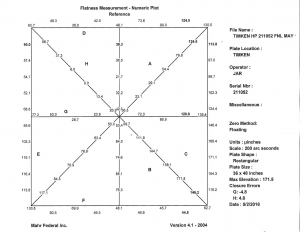
ฉันมั่นใจว่าหากคุณเป็นหนึ่งในผู้ที่จ้างผู้รับเหมาสอบเทียบแผ่นโลหะโดยใช้ระบบออโตคอลลิเมชั่น คุณคงไม่เคยเห็นหน้าเหล่านั้นมาก่อน! ภาพที่ 3 เป็นตัวอย่างหนึ่งของแค่หนึ่งจำเป็นต้องใช้เอกสารแปดหน้าในการคำนวณความเรียบโดยรวม หนึ่งในข้อบ่งชี้ถึงความไม่รู้และเจตนาร้ายนั้นคือ หากรายงานของคุณมีตัวเลขกลมๆ เช่น 200, 400, 650 เป็นต้น ค่าที่คำนวณอย่างถูกต้องจะเป็นจำนวนจริง เช่น 325.4 u/in เมื่อผู้รับเหมาใช้วิธีการคำนวณของมูดี้ และช่างเทคนิคคำนวณค่าด้วยตนเอง คุณควรได้รับเอกสารการคำนวณแปดหน้าและแผนภาพไอโซเมตริก แผนภาพไอโซเมตริกจะแสดงความสูงที่แตกต่างกันไปตามเส้นต่างๆ และระยะห่างระหว่างจุดตัดที่เลือกไว้
รูปที่ 3(การคำนวณความเรียบด้วยตนเองต้องใช้เอกสารแบบนี้ถึงแปดหน้า อย่าลืมสอบถามหากผู้รับเหมาของคุณใช้ระบบวัดความเรียบอัตโนมัติว่าทำไมคุณถึงไม่ได้รับข้อมูลนี้!)
รูปที่ 4
ช่างเทคนิคด้านการวัดขนาดใช้ระดับน้ำแบบดิฟเฟอเรนเชียล (รูปที่ 4) เป็นอุปกรณ์ที่นิยมใช้ในการวัดการเปลี่ยนแปลงเล็กน้อยของมุมจากจุดวัดหนึ่งไปยังอีกจุดหนึ่ง ระดับน้ำเหล่านี้มีความละเอียดสูงถึง 0.1 อาร์คเซคอนด์ (5 ไมโครนิ้ว โดยใช้รางเลื่อนขนาด 4 นิ้ว) มีความเสถียรสูง ไม่ได้รับผลกระทบจากการสั่นสะเทือน ระยะทางที่วัด กระแสลม ความเหนื่อยล้าของผู้ปฏิบัติงาน การปนเปื้อนในอากาศ หรือปัญหาใดๆ ที่เกิดขึ้นกับอุปกรณ์อื่นๆ เมื่อรวมกับการใช้คอมพิวเตอร์ช่วย การทำงานก็จะรวดเร็วขึ้นอย่างมาก และสร้างแผนภาพภูมิประเทศและแผนภาพไอโซเมตริกเพื่อพิสูจน์การตรวจสอบ และที่สำคัญที่สุดคือการซ่อมแซม
การทดสอบความสามารถในการทำซ้ำที่เหมาะสม
การอ่านค่าซ้ำหรือความสามารถในการอ่านค่าซ้ำได้นั้นเป็นการทดสอบที่สำคัญที่สุด อุปกรณ์ที่เราใช้ในการทดสอบความสามารถในการอ่านค่าซ้ำได้ประกอบด้วยอุปกรณ์จับยึดสำหรับการอ่านค่าซ้ำ, LVDT และแอมพลิฟายเออร์ ซึ่งจำเป็นสำหรับการอ่านค่าที่มีความละเอียดสูง เราตั้งค่าแอมพลิฟายเออร์ LVDT ให้มีความละเอียดขั้นต่ำ 10 ไมโครนิ้ว หรือ 5 ไมโครนิ้ว สำหรับแผ่นทดสอบที่มีความแม่นยำสูง
การใช้เครื่องวัดเชิงกลที่มีความละเอียดเพียง 20 ไมโครนิ้วนั้นไร้ประโยชน์ หากคุณพยายามทดสอบเพื่อให้ได้ค่าความแม่นยำในการวัดซ้ำที่ 35 ไมโครนิ้ว เครื่องวัดเชิงกลมีความคลาดเคลื่อนถึง 40 ไมโครนิ้ว! การตั้งค่าการอ่านค่าซ้ำนี้จำลองการทำงานของเครื่องวัดความสูง/ชิ้นส่วน
ความสามารถในการทำซ้ำได้นั้น ไม่เหมือนกับความเรียบโดยรวม (ระนาบเฉลี่ย) ผมชอบคิดว่าความสามารถในการทำซ้ำได้ในหินแกรนิตนั้น เปรียบเสมือนการวัดรัศมีที่สม่ำเสมอ
รูปที่ 5
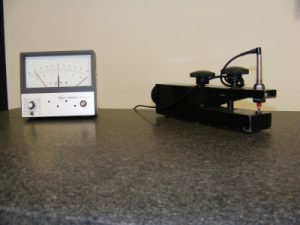
หากคุณทดสอบความสม่ำเสมอของลูกบอลกลม แสดงว่าคุณได้พิสูจน์แล้วว่ารัศมีของลูกบอลไม่ได้เปลี่ยนแปลง (รูปทรงที่เหมาะสมของแผ่นที่ซ่อมแซมอย่างถูกต้องจะมีลักษณะโค้งนูน) อย่างไรก็ตาม เป็นที่ชัดเจนว่าลูกบอลไม่ได้แบนราบ หรืออาจจะแบนราบในระยะทางสั้นๆ เนื่องจากการตรวจสอบส่วนใหญ่เกี่ยวข้องกับการใช้เกจวัดความสูงใกล้กับชิ้นส่วนมาก ความสม่ำเสมอจึงกลายเป็นคุณสมบัติที่สำคัญที่สุดของแผ่นหินแกรนิต มันสำคัญกว่าความเรียบโดยรวม เว้นแต่ผู้ใช้จะตรวจสอบความตรงของชิ้นส่วนยาวๆ
ตรวจสอบให้แน่ใจว่าผู้รับเหมาของคุณทำการทดสอบการอ่านซ้ำ แผ่นโลหะอาจมีการอ่านซ้ำที่คลาดเคลื่อนจากค่าความคลาดเคลื่อนมาตรฐานอย่างมาก แต่ยังคงผ่านการทดสอบความเรียบได้! น่าประหลาดใจที่ห้องปฏิบัติการบางแห่งได้รับการรับรองมาตรฐานการทดสอบโดยไม่รวมการทดสอบการอ่านซ้ำ ห้องปฏิบัติการที่ไม่สามารถซ่อมแซมได้หรือไม่มีความชำนาญในการซ่อมแซม มักจะเลือกทำการทดสอบความเรียบเพียงอย่างเดียว ความเรียบแทบจะไม่เปลี่ยนแปลงเลย เว้นแต่คุณจะขยับแผ่นโลหะ
การทดสอบการอ่านซ้ำเป็นวิธีทดสอบที่ง่ายที่สุด แต่ทำได้ยากที่สุดเมื่อทำการขัดผิว ตรวจสอบให้แน่ใจว่าผู้รับเหมาของคุณสามารถคืนค่าความสม่ำเสมอได้โดยไม่ทำให้พื้นผิวเป็นแอ่งหรือเกิดคลื่นบนพื้นผิว
การทดสอบเดลต้าที
การทดสอบนี้เกี่ยวข้องกับการวัดอุณหภูมิที่แท้จริงของหินที่พื้นผิวด้านบนและด้านล่าง และคำนวณหาความแตกต่าง หรือ เดลต้า ที (Delta T) เพื่อใช้ในการรายงานลงในใบรับรอง
สิ่งสำคัญคือต้องทราบว่าค่าสัมประสิทธิ์การขยายตัวทางความร้อนเฉลี่ยของหินแกรนิตคือ 3.5 ไมโครนิ้ว/นิ้ว/องศา ผลกระทบของอุณหภูมิและความชื้นโดยรอบต่อแผ่นหินแกรนิตนั้นน้อยมาก อย่างไรก็ตาม แผ่นผิวหน้าอาจมีการเปลี่ยนแปลงเกินค่าที่ยอมรับได้ หรือบางครั้งอาจดีขึ้นแม้จะมีค่า Delta T เพียง 0.3 – 0.5 องศาฟาเรนไฮต์ จำเป็นต้องทราบว่าค่า Delta T อยู่ภายใน 0.12 องศาฟาเรนไฮต์ เมื่อเทียบกับค่าที่ได้จากการสอบเทียบครั้งล่าสุด
สิ่งสำคัญอีกประการหนึ่งคือต้องทราบว่าพื้นผิวการทำงานของแผ่นโลหะจะเคลื่อนที่เข้าหาความร้อน หากอุณหภูมิด้านบนสูงกว่าด้านล่าง พื้นผิวด้านบนจะยกตัวขึ้น หากด้านล่างสูงกว่า ซึ่งเกิดขึ้นได้ยาก พื้นผิวด้านบนจะยุบตัวลง การที่ผู้จัดการคุณภาพหรือช่างเทคนิคทราบว่าแผ่นโลหะเรียบและสามารถทำซ้ำได้ในขณะทำการสอบเทียบหรือซ่อมแซมนั้นไม่เพียงพอ แต่ต้องทราบค่า Delta T ในขณะทำการทดสอบการสอบเทียบขั้นสุดท้ายด้วย ในสถานการณ์วิกฤต ผู้ใช้สามารถวัดค่า Delta T ด้วยตนเองเพื่อตรวจสอบว่าแผ่นโลหะอยู่นอกช่วงความคลาดเคลื่อนหรือไม่ เนื่องจากความผันแปรของค่า Delta T เพียงอย่างเดียว โชคดีที่หินแกรนิตใช้เวลาหลายชั่วโมงหรือหลายวันในการปรับตัวให้เข้ากับสภาพแวดล้อม ความผันผวนเล็กน้อยของอุณหภูมิแวดล้อมตลอดทั้งวันจะไม่ส่งผลกระทบต่อมัน ด้วยเหตุผลเหล่านี้ เราจึงไม่รายงานอุณหภูมิหรือความชื้นแวดล้อมในการสอบเทียบ เนื่องจากผลกระทบนั้นน้อยมาก
การสึกหรอของแผ่นหินแกรนิต
แม้ว่าหินแกรนิตจะแข็งกว่าแผ่นเหล็ก แต่หินแกรนิตก็ยังเกิดรอยบุ๋มบนพื้นผิวได้ การเคลื่อนที่ซ้ำๆ ของชิ้นส่วนและเครื่องมือวัดบนพื้นผิวแผ่นเป็นสาเหตุหลักของการสึกหรอ โดยเฉพาะอย่างยิ่งหากใช้พื้นที่เดิมซ้ำๆ สิ่งสกปรกและฝุ่นจากการเจียรที่ตกค้างอยู่บนพื้นผิวแผ่นจะเร่งกระบวนการสึกหรอ เนื่องจากฝุ่นเหล่านี้จะเข้าไปอยู่ระหว่างชิ้นส่วนหรือเครื่องมือวัดกับพื้นผิวหินแกรนิต เมื่อเคลื่อนย้ายชิ้นส่วนและเครื่องมือวัดไปบนพื้นผิว ฝุ่นที่มีฤทธิ์กัดกร่อนมักเป็นสาเหตุของการสึกหรอเพิ่มเติม ขอแนะนำให้ทำความสะอาดอย่างสม่ำเสมอเพื่อลดการสึกหรอ เราเคยพบการสึกหรอที่แผ่นเนื่องจากการวางพัสดุ UPS ไว้บนแผ่นทุกวัน! บริเวณที่สึกหรอเฉพาะจุดเหล่านั้นส่งผลต่อค่าการทดสอบความแม่นยำในการสอบเทียบ หลีกเลี่ยงการสึกหรอโดยการทำความสะอาดเป็นประจำ
การทำความสะอาดแผ่นหินแกรนิต
เพื่อให้แผ่นเจียรสะอาดอยู่เสมอ ให้ใช้ผ้าชุบน้ำยาขจัดฝุ่นและสิ่งสกปรกออก กดเบา ๆ เพื่อไม่ให้เกิดคราบกาว ผ้าชุบน้ำยาที่ใช้แล้วจะช่วยขจัดฝุ่นจากการเจียรได้ดีเยี่ยมระหว่างการทำความสะอาด อย่าทำงานในจุดเดิมซ้ำ ๆ ให้เคลื่อนย้ายอุปกรณ์ไปรอบ ๆ แผ่นเจียร เพื่อกระจายการสึกหรอ สามารถใช้แอลกอฮอล์ทำความสะอาดแผ่นเจียรได้ แต่ควรระวังว่าการทำเช่นนั้นจะทำให้พื้นผิวเย็นลงชั่วคราว น้ำผสมสบู่เล็กน้อยก็ใช้ได้ดีเช่นกัน น้ำยาทำความสะอาดที่มีขายทั่วไป เช่น น้ำยาทำความสะอาดของ Starrett ก็ใช้ได้ดีเช่นกัน แต่ต้องแน่ใจว่าได้เช็ดคราบสบู่ทั้งหมดออกจากพื้นผิวแล้ว
การซ่อมแซมแผ่นหินแกรนิต
ถึงตอนนี้คงเห็นได้ชัดแล้วว่า การตรวจสอบให้แน่ใจว่าผู้รับเหมาปรับเทียบพื้นผิวแผ่นโลหะของคุณทำการสอบเทียบอย่างมีประสิทธิภาพนั้นมีความสำคัญเพียงใด ห้องปฏิบัติการประเภท "ศูนย์กลางข้อมูล" ที่เสนอโปรแกรม "ทำทุกอย่างด้วยการโทรครั้งเดียว" มักไม่มีช่างเทคนิคที่สามารถทำการซ่อมแซมได้ แม้ว่าจะมีบริการซ่อมแซม แต่ก็ไม่ได้มีช่างเทคนิคที่มีประสบการณ์เพียงพอเสมอไปเมื่อพื้นผิวแผ่นโลหะมีค่าคลาดเคลื่อนอย่างมาก
หากได้รับแจ้งว่าจานไม่สามารถซ่อมแซมได้เนื่องจากสึกหรอมากเกินไป โปรดติดต่อเรา เราสามารถซ่อมแซมได้เกือบแน่นอน
ช่างเทคนิคของเราฝึกงานเป็นเวลาหนึ่งถึงหนึ่งปีครึ่งภายใต้การดูแลของช่างเทคนิคผู้เชี่ยวชาญด้านแผ่นวัดพื้นผิว เรากำหนดนิยามของช่างเทคนิคผู้เชี่ยวชาญด้านแผ่นวัดพื้นผิวว่าคือผู้ที่สำเร็จการฝึกงานและมีประสบการณ์เพิ่มเติมมากกว่าสิบปีในการสอบเทียบและซ่อมแซมแผ่นวัดพื้นผิว ที่ Dimensional Gauge เรามีช่างเทคนิคผู้เชี่ยวชาญสามท่านที่มีประสบการณ์รวมกันมากกว่า 60 ปี ช่างเทคนิคผู้เชี่ยวชาญของเราท่านหนึ่งพร้อมให้การสนับสนุนและคำแนะนำตลอดเวลาเมื่อเกิดสถานการณ์ที่ยากลำบาก ช่างเทคนิคของเราทุกคนมีประสบการณ์ในการสอบเทียบแผ่นวัดพื้นผิวทุกขนาด ตั้งแต่ขนาดเล็กไปจนถึงขนาดใหญ่มาก ในสภาพแวดล้อมที่หลากหลาย อุตสาหกรรมต่างๆ และปัญหาการสึกหรอที่สำคัญ
ข้อกำหนดของ Fed Specs ระบุค่าความเรียบผิวที่ต้องการไว้ที่ 16 ถึง 64 Average Arithmetic Roughness (AA) แต่เราต้องการค่าความเรียบผิวในช่วง 30-35 AA ซึ่งมีความหยาบผิวเพียงพอที่จะทำให้ชิ้นส่วนและเครื่องมือวัดเคลื่อนที่ได้อย่างราบรื่น ไม่ติดขัด หรือบิดงอไปกับพื้นผิวแผ่น
เมื่อเราทำการซ่อมแซม เราจะตรวจสอบแผ่นฐานว่าติดตั้งอย่างถูกต้องและได้ระดับหรือไม่ เราใช้วิธีการขัดแบบแห้ง แต่ในกรณีที่สึกหรอมากจนต้องเจียรหินแกรนิตออกเป็นจำนวนมาก เราจะใช้วิธีการขัดแบบเปียก ช่างเทคนิคของเราทำความสะอาดหลังจากเสร็จงาน พวกเขาทำงานได้อย่างละเอียด รวดเร็ว และแม่นยำ ซึ่งเป็นสิ่งสำคัญเพราะค่าใช้จ่ายในการซ่อมแซมแผ่นฐานหินแกรนิตนั้นรวมถึงเวลาหยุดทำงานและผลผลิตที่สูญเสียไป การซ่อมแซมที่มีประสิทธิภาพมีความสำคัญอย่างยิ่ง และคุณไม่ควรเลือกผู้รับเหมาเพียงเพราะราคาหรือความสะดวกสบาย งานปรับเทียบบางอย่างต้องการบุคลากรที่มีความเชี่ยวชาญสูง เรามีบุคลากรเหล่านั้น
รายงานผลการสอบเทียบขั้นสุดท้าย
สำหรับงานซ่อมและสอบเทียบแผ่นพื้นผิวแต่ละครั้ง เราจัดทำรายงานระดับมืออาชีพโดยละเอียด รายงานของเราประกอบด้วยข้อมูลที่สำคัญและเกี่ยวข้องจำนวนมาก ข้อกำหนดของรัฐบาลกลางกำหนดให้ต้องมีข้อมูลส่วนใหญ่ที่เราจัดทำขึ้น ยกเว้นข้อมูลที่อยู่ในมาตรฐานคุณภาพอื่นๆ เช่น ISO/IEC-17025 ข้อกำหนดขั้นต่ำของรัฐบาลกลางสำหรับรายงานมีดังนี้:
- ขนาดเป็นฟุต (X' x X')
- สี
- รูปแบบ (หมายถึงไม่มีขอบยึด หรือมีขอบยึดสองหรือสี่อัน)
- ค่าโมดูลัสความยืดหยุ่นโดยประมาณ
- ค่าความคลาดเคลื่อนเฉลี่ยของระนาบ (กำหนดโดยเกรด/ขนาด)
- ค่าความคลาดเคลื่อนในการอ่านซ้ำ (กำหนดโดยความยาวแนวทแยงในหน่วยนิ้ว)
- ระนาบเฉลี่ยที่พบ
- ระนาบเฉลี่ยดังแสดงทางซ้าย
- อ่านซ้ำตามที่พบ
- อ่านซ้ำตามด้านซ้าย
- เดลต้าที (ความแตกต่างของอุณหภูมิระหว่างพื้นผิวด้านบนและด้านล่าง)
หากช่างเทคนิคจำเป็นต้องทำการขัดหรือซ่อมแซมแผ่นผิวหน้า ใบรับรองการสอบเทียบจะต้องแนบมาพร้อมกับแผนที่ภูมิประเทศหรือแผนที่ไอโซเมตริกเพื่อพิสูจน์ว่าการซ่อมแซมนั้นถูกต้อง
คำอธิบายเกี่ยวกับมาตรฐาน ISO/IEC-17025 และห้องปฏิบัติการที่ได้รับการรับรอง
การที่ห้องปฏิบัติการได้รับการรับรองด้านการสอบเทียบแผ่นพื้นผิวไม่ได้หมายความว่าพวกเขารู้ว่ากำลังทำอะไรอยู่ หรือแม้แต่ทำได้อย่างถูกต้อง! และไม่ได้หมายความว่าห้องปฏิบัติการนั้นจะสามารถซ่อมแซมได้เสมอไป หน่วยงานที่ให้การรับรองไม่ได้แยกความแตกต่างระหว่างการตรวจสอบหรือการสอบเทียบ (การซ่อมแซม)Aและฉันก็รู้จักคนหนึ่ง อาจจะนะ2หน่วยงานรับรองที่จะLผูกAถ้าฉันจ่ายเงินให้พวกเขามากพอ ฉันคงได้ผูกริบบิ้นรอบคอสุนัขของฉัน! นี่เป็นความจริงที่น่าเศร้า ฉันเคยเห็นห้องปฏิบัติการได้รับการรับรองโดยทำการทดสอบเพียงหนึ่งในสามรายการที่กำหนดไว้เท่านั้น ยิ่งไปกว่านั้น ฉันยังเคยเห็นห้องปฏิบัติการได้รับการรับรองด้วยค่าความคลาดเคลื่อนที่ไม่สมจริง และได้รับการรับรองโดยไม่มีหลักฐานหรือการสาธิตใด ๆ ว่าพวกเขาคำนวณค่าเหล่านั้นอย่างไร มันเป็นเรื่องที่น่าเสียใจอย่างยิ่ง
ผลรวม
คุณไม่สามารถมองข้ามบทบาทของแผ่นหินแกรนิตที่มีความแม่นยำสูงได้เลย พื้นผิวเรียบที่แผ่นหินแกรนิตเหล่านี้ให้มาเป็นพื้นฐานในการวัดค่าอื่นๆ ทั้งหมด
คุณสามารถใช้เครื่องมือวัดที่ทันสมัย แม่นยำ และใช้งานได้หลากหลายที่สุดได้ อย่างไรก็ตาม การวัดที่แม่นยำนั้นทำได้ยากหากพื้นผิวอ้างอิงไม่เรียบ ครั้งหนึ่ง ลูกค้ารายหนึ่งบอกกับผมว่า “มันก็แค่หิน!” ผมตอบไปว่า “โอเค คุณพูดถูก และคุณก็ไม่ควรจ้างผู้เชี่ยวชาญมาดูแลแผ่นพื้นผิวของคุณ”
ราคาไม่ใช่เหตุผลที่ดีในการเลือกผู้รับเหมาติดตั้งแผ่นพื้นผิวเสมอไป ผู้ซื้อ นักบัญชี และวิศวกรคุณภาพจำนวนมากมักไม่เข้าใจว่า การรับรองแผ่นหินแกรนิตใหม่นั้นแตกต่างจากการรับรองไมโครมิเตอร์ เวอร์เนียร์คาลิเปอร์ หรือมัลติมิเตอร์แบบดิจิทัล
เครื่องมือบางอย่างต้องการความเชี่ยวชาญ ไม่ใช่แค่ราคาถูก อย่างไรก็ตาม อัตราค่าบริการของเรานั้นสมเหตุสมผลมาก โดยเฉพาะอย่างยิ่งเมื่อคุณมั่นใจว่าเราจะทำงานได้อย่างถูกต้อง เราให้บริการที่เหนือกว่าข้อกำหนดของ ISO-17025 และข้อกำหนดของรัฐบาลกลาง โดยเพิ่มมูลค่าให้กับลูกค้าเป็นอย่างมาก
แผ่นพื้นผิวเป็นพื้นฐานสำหรับการวัดขนาดหลายอย่าง และการดูแลรักษาแผ่นพื้นผิวอย่างถูกต้องเป็นสิ่งจำเป็นเพื่อให้มั่นใจได้ถึงความแม่นยำในการวัด
หินแกรนิตเป็นวัสดุที่นิยมใช้มากที่สุดสำหรับแผ่นพื้นผิว เนื่องจากมีคุณสมบัติทางกายภาพที่เหมาะสม เช่น ความแข็งของพื้นผิวและความไวต่อการเปลี่ยนแปลงอุณหภูมิต่ำ อย่างไรก็ตาม เมื่อใช้งานอย่างต่อเนื่อง แผ่นพื้นผิวก็จะสึกหรอไปบ้าง
ความเรียบและความสามารถในการทำซ้ำได้เป็นสิ่งสำคัญอย่างยิ่งในการพิจารณาว่าแผ่นโลหะนั้นมีพื้นผิวที่แม่นยำสำหรับการวัดที่ถูกต้องหรือไม่ ค่าความคลาดเคลื่อนสำหรับทั้งสองด้านนั้นกำหนดไว้ในข้อกำหนดของรัฐบาลกลาง GGG-P-463C, DIN, GB, JJS... ความเรียบคือการวัดระยะห่างระหว่างจุดสูงสุด (ระนาบหลังคา) และจุดต่ำสุด (ระนาบฐาน) บนแผ่นโลหะ ความสามารถในการทำซ้ำได้จะพิจารณาว่าการวัดจากพื้นที่หนึ่งสามารถทำซ้ำได้ทั่วทั้งแผ่นภายในค่าความคลาดเคลื่อนที่กำหนดหรือไม่ ซึ่งจะช่วยให้มั่นใจได้ว่าไม่มีส่วนที่นูนหรือส่วนที่เว้าแหว่งบนแผ่นโลหะ หากค่าที่วัดได้ไม่เป็นไปตามแนวทางที่กำหนด อาจจำเป็นต้องทำการปรับพื้นผิวใหม่เพื่อให้ค่าที่วัดได้กลับมาอยู่ในข้อกำหนด
การสอบเทียบแผ่นพื้นผิวเป็นประจำมีความจำเป็นเพื่อให้มั่นใจได้ถึงความเรียบและความแม่นยำในการวัดซ้ำตลอดเวลา กลุ่มงานวัดความแม่นยำของ Cross ได้รับการรับรองมาตรฐาน ISO 17025 สำหรับการสอบเทียบความเรียบและความแม่นยำในการวัดซ้ำของแผ่นพื้นผิว เราใช้ระบบการรับรองแผ่นพื้นผิว Mahr ซึ่งมีคุณสมบัติดังนี้:
- การวิเคราะห์อารมณ์และลักษณะนิสัย
- กราฟไอโซเมตริกหรือกราฟเชิงตัวเลข
- ค่าเฉลี่ยการวิ่งหลายครั้ง และ
- การคัดเกรดอัตโนมัติตามมาตรฐานอุตสาหกรรม
แบบจำลองช่วยคำนวณของ Mahr สามารถระบุค่าเบี่ยงเบนเชิงมุมหรือเชิงเส้นจากระดับสัมบูรณ์ได้ และเหมาะอย่างยิ่งสำหรับการวัดโปรไฟล์พื้นผิวแผ่นโลหะที่มีความแม่นยำสูง
ช่วงเวลาในการสอบเทียบจะแตกต่างกันไป ขึ้นอยู่กับความถี่ในการใช้งาน สภาพแวดล้อมที่ติดตั้งแผ่นวัด และข้อกำหนดด้านคุณภาพเฉพาะของบริษัทของคุณ การดูแลรักษาแผ่นวัดอย่างเหมาะสมอาจช่วยให้สามารถยืดช่วงเวลาในการสอบเทียบแต่ละครั้งได้นานขึ้น ช่วยให้คุณหลีกเลี่ยงค่าใช้จ่ายเพิ่มเติมในการขัดผิวแผ่นวัดซ้ำ และที่สำคัญที่สุดคือช่วยให้มั่นใจได้ว่าการวัดที่คุณได้รับจากแผ่นวัดนั้นมีความแม่นยำมากที่สุดเท่าที่จะเป็นไปได้ แม้ว่าแผ่นวัดจะดูแข็งแรงทนทาน แต่ก็เป็นเครื่องมือที่มีความแม่นยำสูงและควรได้รับการดูแลอย่างเหมาะสม ต่อไปนี้เป็นสิ่งที่คุณควรพิจารณาเกี่ยวกับการดูแลรักษาแผ่นวัดของคุณ:
- รักษาจานให้สะอาด และถ้าเป็นไปได้ควรปิดฝาเมื่อไม่ได้ใช้งาน
- ไม่ควรวางสิ่งใดลงบนจาน ยกเว้นเครื่องมือวัดหรือชิ้นส่วนที่จะวัด
- อย่าใช้จุดเดิมบนจานทุกครั้ง
- ถ้าเป็นไปได้ ควรหมุนจานเป็นระยะๆ
- โปรดเคารพขีดจำกัดน้ำหนักบรรทุกของแผ่นเหล็กของคุณ
ฐานหินแกรนิตความแม่นยำสูงสามารถปรับปรุงประสิทธิภาพของเครื่องมือกลได้
ความต้องการในด้านวิศวกรรมเครื่องกลโดยทั่วไป และโดยเฉพาะอย่างยิ่งในด้านการผลิตเครื่องมือกลนั้นเพิ่มขึ้นอย่างต่อเนื่อง การบรรลุความแม่นยำและประสิทธิภาพสูงสุดโดยไม่เพิ่มต้นทุนเป็นความท้าทายอย่างต่อเนื่องในการแข่งขัน ฐานรองเครื่องมือกลเป็นปัจจัยสำคัญในเรื่องนี้ ดังนั้น ผู้ผลิตเครื่องมือกลจำนวนมากขึ้นเรื่อยๆ จึงหันมาใช้หินแกรนิต เนื่องจากคุณสมบัติทางกายภาพของมัน ทำให้มีข้อได้เปรียบที่ชัดเจนซึ่งไม่สามารถทำได้ด้วยเหล็กหรือคอนกรีตโพลีเมอร์
หินแกรนิตเป็นหินภูเขาไฟที่เกิดขึ้นจากใต้พื้นโลก มีโครงสร้างที่หนาแน่นและเป็นเนื้อเดียวกันสูง มีค่าสัมประสิทธิ์การขยายตัวต่ำมาก ค่าการนำความร้อนต่ำ และมีคุณสมบัติในการลดแรงสั่นสะเทือนสูง
ด้านล่างนี้ คุณจะได้ค้นพบว่าเหตุใดความคิดเห็นทั่วไปที่ว่าหินแกรนิตเหมาะสำหรับใช้เป็นฐานเครื่องจักรสำหรับเครื่องวัดพิกัดระดับสูงเท่านั้นจึงเป็นความคิดที่ล้าสมัยไปนานแล้ว และเหตุใดวัสดุจากธรรมชาติชนิดนี้จึงเป็นทางเลือกที่ได้เปรียบอย่างมากในการใช้เป็นฐานเครื่องมือกลแทนเหล็กหรือเหล็กหล่อ แม้แต่สำหรับเครื่องมือกลที่มีความแม่นยำสูงก็ตาม
เราสามารถผลิตชิ้นส่วนหินแกรนิตสำหรับระบบการเคลื่อนที่แบบไดนามิก ชิ้นส่วนหินแกรนิตสำหรับมอเตอร์เชิงเส้น ชิ้นส่วนหินแกรนิตสำหรับงานตรวจสอบแบบไม่ทำลาย (NDT) ชิ้นส่วนหินแกรนิตสำหรับงานเอ็กซ์เรย์ ชิ้นส่วนหินแกรนิตสำหรับเครื่องวัดพิกัดสามมิติ (CMM) ชิ้นส่วนหินแกรนิตสำหรับเครื่อง CNC ชิ้นส่วนหินแกรนิตที่มีความแม่นยำสูงสำหรับเลเซอร์ ชิ้นส่วนหินแกรนิตสำหรับอุตสาหกรรมการบินและอวกาศ ชิ้นส่วนหินแกรนิตสำหรับแท่นวางชิ้นงานที่มีความแม่นยำสูง...
เพิ่มมูลค่าสูงโดยไม่มีค่าใช้จ่ายเพิ่มเติม
การใช้งานหินแกรนิตในงานวิศวกรรมเครื่องกลที่เพิ่มมากขึ้นนั้น ไม่ได้เกิดจากการที่ราคาเหล็กพุ่งสูงขึ้นอย่างมากเป็นหลัก แต่เป็นเพราะการเพิ่มมูลค่าให้กับเครื่องมือกลด้วยฐานเครื่องจักรที่ทำจากหินแกรนิตนั้น สามารถทำได้โดยแทบไม่มีต้นทุนเพิ่มเติม หรืออาจไม่มีเลย ซึ่งได้รับการพิสูจน์แล้วจากการเปรียบเทียบต้นทุนของผู้ผลิตเครื่องมือกลที่มีชื่อเสียงในเยอรมนีและยุโรป
ข้อดีอย่างมากในด้านเสถียรภาพทางอุณหพลศาสตร์ การลดแรงสั่นสะเทือน และความแม่นยำในระยะยาวที่ได้จากหินแกรนิตนั้น ไม่สามารถทำได้ด้วยฐานรองชิ้นงานที่ทำจากเหล็กหล่อหรือเหล็กกล้า หรือหากทำได้ก็จะมีต้นทุนที่สูงมาก ตัวอย่างเช่น ข้อผิดพลาดจากความร้อนอาจคิดเป็นสัดส่วนถึง 75% ของข้อผิดพลาดทั้งหมดของเครื่องจักร โดยมักพยายามชดเชยด้วยซอฟต์แวร์ แต่ก็ประสบความสำเร็จเพียงเล็กน้อย เนื่องจากค่าการนำความร้อนต่ำ หินแกรนิตจึงเป็นฐานรองชิ้นงานที่ดีกว่าสำหรับความแม่นยำในระยะยาว
ด้วยค่าความคลาดเคลื่อน 1 ไมโครเมตร หินแกรนิตจึงตรงตามข้อกำหนดด้านความเรียบตามมาตรฐาน DIN 876 สำหรับระดับความแม่นยำ 00 ได้อย่างง่ายดาย ด้วยค่าความแข็ง 6 บนมาตราความแข็ง 1 ถึง 10 หินแกรนิตจึงแข็งมาก และด้วยน้ำหนักจำเพาะ 2.8 กรัม/ซม³ จึงเกือบเท่ากับอะลูมิเนียม สิ่งนี้ยังส่งผลให้มีข้อดีเพิ่มเติม เช่น อัตราการป้อนที่สูงขึ้น ความเร่งแกนที่สูงขึ้น และอายุการใช้งานของเครื่องมือตัดที่ยาวนานขึ้น ดังนั้น การเปลี่ยนจากฐานหล่อเป็นฐานเครื่องจักรหินแกรนิตจึงยกระดับเครื่องมือกลนั้นไปสู่ระดับสูงในแง่ของความแม่นยำและประสิทธิภาพ โดยไม่มีค่าใช้จ่ายเพิ่มเติม
รอยเท้าทางนิเวศวิทยาที่ดีขึ้นของหินแกรนิต
เมื่อเปรียบเทียบกับวัสดุอย่างเหล็กหรือเหล็กหล่อ หินธรรมชาติไม่จำเป็นต้องใช้พลังงานจำนวนมากและสารเติมแต่งในการผลิต ใช้พลังงานเพียงเล็กน้อยในการขุดและปรับสภาพพื้นผิวเท่านั้น ส่งผลให้มีผลกระทบต่อสิ่งแวดล้อมต่ำกว่าเหล็ก แม้กระทั่งเมื่อสิ้นสุดอายุการใช้งานของเครื่องจักรแล้วก็ตาม หินแกรนิตสามารถนำไปใช้เป็นพื้นฐานสำหรับเครื่องจักรใหม่ หรือใช้เพื่อวัตถุประสงค์อื่น ๆ เช่น การบดเพื่อการก่อสร้างถนน
หินแกรนิตนั้นมีอยู่มากมายมหาศาล เป็นหินที่เกิดจากแมกมาภายในเปลือกโลก มัน "สุกงอม" มานานหลายล้านปีแล้ว และมีอยู่เป็นทรัพยากรธรรมชาติในปริมาณมากเกือบทุกทวีป รวมถึงทั่วทั้งยุโรปด้วย
สรุป: ข้อดีมากมายที่พิสูจน์ได้ของหินแกรนิตเมื่อเทียบกับเหล็กหรือเหล็กหล่อ ทำให้วิศวกรเครื่องกลหันมาใช้หินแกรนิตซึ่งเป็นวัสดุธรรมชาติมากขึ้นเรื่อยๆ ในฐานะพื้นฐานสำหรับเครื่องมือกลที่มีความแม่นยำสูงและประสิทธิภาพสูง ข้อมูลโดยละเอียดเกี่ยวกับคุณสมบัติของหินแกรนิตซึ่งเป็นประโยชน์ต่อเครื่องมือกลและวิศวกรรมเครื่องกล สามารถพบได้ในบทความต่อไปนี้
การวัดซ้ำคือการวัดความเรียบเฉพาะจุด ข้อกำหนดการวัดซ้ำระบุว่า การวัดใดๆ บนพื้นผิวของแผ่นโลหะจะต้องได้ผลลัพธ์ที่ตรงตามค่าความคลาดเคลื่อนที่กำหนด การควบคุมความเรียบเฉพาะจุดให้เข้มงวดกว่าการควบคุมความเรียบโดยรวม จะรับประกันการเปลี่ยนแปลงความเรียบของพื้นผิวอย่างค่อยเป็นค่อยไป ซึ่งจะช่วยลดข้อผิดพลาดเฉพาะจุดได้
ผู้ผลิตส่วนใหญ่ รวมถึงแบรนด์นำเข้า ปฏิบัติตามข้อกำหนดของรัฐบาลกลางเกี่ยวกับค่าความคลาดเคลื่อนของความเรียบโดยรวม แต่หลายรายมองข้ามการวัดซ้ำ แผ่นเหล็กราคาถูกหรือราคาประหยัดจำนวนมากในท้องตลาดปัจจุบันจะไม่รับประกันการวัดซ้ำ ผู้ผลิตที่ไม่รับประกันการวัดซ้ำนั้น ไม่ได้ผลิตแผ่นเหล็กที่ตรงตามข้อกำหนดของ ASME B89.3.7-2013 หรือข้อกำหนดของรัฐบาลกลาง GGG-P-463c หรือ DIN 876, GB, JJS...
ทั้งสองอย่างมีความสำคัญอย่างยิ่งต่อการรับประกันพื้นผิวที่แม่นยำสำหรับการวัดที่ถูกต้อง ข้อกำหนดเรื่องความเรียบเพียงอย่างเดียวไม่เพียงพอที่จะรับประกันความแม่นยำในการวัด ยกตัวอย่างเช่น แผ่นพื้นผิวเกรด A สำหรับการตรวจสอบ ขนาด 36 x 48 นิ้ว ซึ่งตรงตามข้อกำหนดเรื่องความเรียบเพียง 0.000300 นิ้วเท่านั้น หากชิ้นงานที่กำลังตรวจสอบมีส่วนที่นูนหลายจุด และเกจที่ใช้วัดอยู่ในจุดที่ต่ำกว่า ข้อผิดพลาดในการวัดอาจเท่ากับค่าความคลาดเคลื่อนทั้งหมดในบริเวณเดียว คือ 0.00300 นิ้ว! ที่จริงแล้ว ข้อผิดพลาดอาจสูงกว่านั้นมากหากเกจวางอยู่บนพื้นผิวที่ลาดเอียง
ความคลาดเคลื่อนขนาด .000600"-.000800" เป็นไปได้ ขึ้นอยู่กับความรุนแรงของความลาดชัน และความยาวแขนของเกจที่ใช้ หากแผ่นเหล็กนี้มีข้อกำหนดการวัดซ้ำที่ .000050"FIR ความคลาดเคลื่อนในการวัดจะน้อยกว่า .000050" ไม่ว่าการวัดจะทำที่จุดใดบนแผ่นเหล็กก็ตาม ปัญหาอีกประการหนึ่ง ซึ่งมักเกิดขึ้นเมื่อช่างเทคนิคที่ไม่มีประสบการณ์พยายามปรับผิวแผ่นเหล็กในสถานที่ทำงาน คือการใช้การวัดซ้ำเพียงอย่างเดียวในการรับรองแผ่นเหล็ก
เครื่องมือที่ใช้ในการตรวจสอบความสามารถในการวัดซ้ำนั้น ไม่ได้ออกแบบมาเพื่อตรวจสอบความเรียบโดยรวม เมื่อตั้งค่าเป็นศูนย์บนพื้นผิวโค้งที่สมบูรณ์แบบ เครื่องมือเหล่านั้นจะยังคงอ่านค่าเป็นศูนย์ ไม่ว่าพื้นผิวนั้นจะเรียบสนิทหรือเว้าหรือนูนอย่างสมบูรณ์แบบก็ตาม! เครื่องมือเหล่านั้นตรวจสอบเพียงความสม่ำเสมอของพื้นผิว ไม่ใช่ความเรียบ แผ่นโลหะที่ตรงตามข้อกำหนดทั้งด้านความเรียบและข้อกำหนดด้านการวัดซ้ำเท่านั้น จึงจะตรงตามข้อกำหนดของ ASME B89.3.7-2013 หรือข้อกำหนดของรัฐบาลกลาง GGG-P-463c อย่างแท้จริง
Ask us about or flatness specification and repeat measurement promise by calling +86 19969991659 or emailing INFO@ZHHIMG.COM
ใช่ แต่รับประกันได้เฉพาะช่วงอุณหภูมิแนวตั้งที่เฉพาะเจาะจงเท่านั้น ผลกระทบจากการขยายตัวทางความร้อนของแผ่นโลหะอาจทำให้ความแม่นยำเปลี่ยนแปลงไปมากกว่าค่าความคลาดเคลื่อนที่ยอมรับได้ หากมีการเปลี่ยนแปลงช่วงอุณหภูมิ ในบางกรณี หากค่าความคลาดเคลื่อนแคบมากพอ ความร้อนที่ดูดซับจากไฟส่องสว่างด้านบนอาจทำให้เกิดการเปลี่ยนแปลงช่วงอุณหภูมิมากพอภายในเวลาไม่กี่ชั่วโมง
หินแกรนิตมีค่าสัมประสิทธิ์การขยายตัวทางความร้อนประมาณ 0.0000035 นิ้วต่อนิ้วต่อ 1°F ตัวอย่างเช่น แผ่นหินขนาด 36" x 48" x 8" มีความแม่นยำ 0.000075" (ครึ่งหนึ่งของเกรด AA) ที่อุณหภูมิเปลี่ยนแปลง 0°F ซึ่งหมายความว่าด้านบนและด้านล่างมีอุณหภูมิเท่ากัน หากด้านบนของแผ่นหินอุ่นขึ้นจนสูงกว่าด้านล่าง 1°F ความแม่นยำจะเปลี่ยนไปเป็น 0.000275" ดังนั้น การสั่งซื้อแผ่นหินที่มีความคลาดเคลื่อนน้อยกว่าเกรด AA สำหรับห้องปฏิบัติการ ควรพิจารณาเฉพาะในกรณีที่มีการควบคุมสภาพอากาศที่เหมาะสมเท่านั้น
แผ่นพื้นผิวควรได้รับการรองรับที่ 3 จุด โดยควรอยู่ห่างจากปลายแผ่นประมาณ 20% ของความยาว สองจุดควรอยู่ห่างจากด้านยาวประมาณ 20% ของความกว้าง และจุดรองรับที่เหลือควรอยู่ตรงกลาง การรองรับเพียง 3 จุดเท่านั้นที่จะทำให้แผ่นพื้นผิววางได้อย่างมั่นคง ยกเว้นพื้นผิวที่มีความแม่นยำสูง
ควรยึดแผ่นโลหะไว้ที่จุดเหล่านี้ระหว่างการผลิต และควรยึดไว้เพียงสามจุดนี้เท่านั้นระหว่างการใช้งาน การพยายามยึดแผ่นโลหะไว้ที่มากกว่าสามจุดจะทำให้แผ่นโลหะได้รับการรองรับจากจุดสามจุดที่แตกต่างกัน ซึ่งจะไม่ใช่สามจุดเดียวกับที่ใช้ในการรองรับระหว่างการผลิต ทำให้เกิดข้อผิดพลาดเนื่องจากแผ่นโลหะจะโก่งตัวเพื่อปรับให้เข้ากับการรองรับแบบใหม่ ขาตั้งเหล็กของ zhhimg ทุกตัวมีคานรองรับที่ออกแบบมาให้ตรงกับจุดรองรับที่เหมาะสม
หากแผ่นโลหะได้รับการรองรับอย่างเหมาะสม การปรับระดับอย่างแม่นยำจะจำเป็นก็ต่อเมื่อการใช้งานของคุณต้องการเท่านั้น การปรับระดับไม่จำเป็นสำหรับการรักษาความแม่นยำของแผ่นโลหะที่ได้รับการรองรับอย่างเหมาะสม
เหตุใดจึงควรเลือกหินแกรนิตสำหรับฐานเครื่องจักรและส่วนประกอบการวัด?
คำตอบคือ 'ใช่' สำหรับเกือบทุกการใช้งาน ข้อดีของหินแกรนิต ได้แก่ ไม่เป็นสนิมหรือผุกร่อน แทบไม่บิดงอ ไม่เกิดรอยนูนเมื่อถูกกระแทก มีอายุการใช้งานยาวนานกว่า การทำงานราบรื่นกว่า มีความแม่นยำสูงกว่า แทบไม่เป็นแม่เหล็ก มีค่าสัมประสิทธิ์การขยายตัวทางความร้อนต่ำ และค่าบำรุงรักษาต่ำ
หินแกรนิตเป็นหินอัคนีชนิดหนึ่งที่ถูกนำมาใช้ประโยชน์อย่างมากเนื่องจากมีความแข็งแรง ความหนาแน่น ความทนทาน และทนต่อการกัดกร่อนสูง แต่หินแกรนิตยังใช้งานได้หลากหลายมาก ไม่ได้ใช้แค่กับรูปทรงสี่เหลี่ยมจัตุรัสหรือสี่เหลี่ยมผืนผ้าเท่านั้น! ที่จริงแล้ว Starrett Tru-Stone มีความเชี่ยวชาญในการทำงานกับชิ้นส่วนหินแกรนิตที่ออกแบบมาในรูปทรง มุม และส่วนโค้งต่างๆ อย่างสม่ำเสมอ ด้วยผลลัพธ์ที่ยอดเยี่ยม
ด้วยกระบวนการผลิตที่ทันสมัยของเรา พื้นผิวที่ตัดแล้วจึงเรียบเนียนเป็นพิเศษ คุณสมบัติเหล่านี้ทำให้หินแกรนิตเป็นวัสดุที่เหมาะสมที่สุดในการสร้างฐานเครื่องจักรและชิ้นส่วนวัดขนาดตามสั่ง หินแกรนิตมีคุณสมบัติดังนี้:
สามารถกลึงได้
เรียบเนียนแม่นยำเมื่อตัดและตกแต่งเสร็จ
ทนทานต่อสนิม
ทนทาน
ใช้งานได้ยาวนาน
ชิ้นส่วนหินแกรนิตทำความสะอาดง่ายเช่นกัน เมื่อออกแบบตามสั่ง ควรเลือกใช้หินแกรนิตเนื่องจากมีคุณสมบัติที่เหนือกว่า
มาตรฐาน/ การใช้งานที่ต้องการความทนทานสูง
หินแกรนิตที่ ZhongHui ใช้สำหรับผลิตภัณฑ์แผ่นพื้นผิวมาตรฐานของเรามีปริมาณควอตซ์สูง ซึ่งช่วยเพิ่มความทนทานต่อการสึกหรอและความเสียหาย สีดำ Superior Black และสีชมพู Crystal Pink ของเรามีอัตราการดูดซับน้ำต่ำ ช่วยลดโอกาสที่เครื่องมือวัดความแม่นยำของคุณจะขึ้นสนิมขณะวางบนแผ่น สีของหินแกรนิตที่ ZhongHui นำเสนอช่วยลดแสงสะท้อน ซึ่งหมายความว่าผู้ใช้งานจะรู้สึกเมื่อยล้าตาน้อยลง เราได้เลือกชนิดของหินแกรนิตโดยคำนึงถึงการขยายตัวทางความร้อนเพื่อลดผลกระทบนี้ให้น้อยที่สุด
แอปพลิเคชันแบบกำหนดเอง
เมื่อการใช้งานของคุณต้องการแผ่นโลหะที่มีรูปทรงเฉพาะตัว เม็ดมีดเกลียว ร่อง หรือการขึ้นรูปอื่นๆ คุณควรเลือกวัสดุอย่างเช่น หินไดอะเบสสีดำ วัสดุจากธรรมชาติชนิดนี้มีความแข็งแกร่งเป็นเลิศ ลดแรงสั่นสะเทือนได้ดี และขึ้นรูปได้ง่ายขึ้น
ใช่ครับ ถ้าหากแผ่นเหล็กไม่สึกหรอมากเกินไป โรงงานของเรามีสภาพแวดล้อมและอุปกรณ์ที่เหมาะสมที่สุดสำหรับการปรับเทียบแผ่นเหล็กและการซ่อมแซมหากจำเป็น โดยทั่วไปแล้ว หากแผ่นเหล็กอยู่ในช่วงความคลาดเคลื่อนที่กำหนดไม่เกิน 0.001 นิ้ว ก็สามารถทำการขัดผิวใหม่ได้ที่หน้างาน แต่หากแผ่นเหล็กสึกหรอจนเกิน 0.001 นิ้ว หรือมีรอยบุ๋มหรือรอยขีดข่วนมาก ก็จะต้องส่งไปที่โรงงานเพื่อทำการเจียรก่อนที่จะทำการขัดผิวใหม่
ควรใช้ความระมัดระวังอย่างยิ่งในการเลือกช่างเทคนิคสอบเทียบและปรับพื้นผิวหน้างาน เราขอแนะนำให้คุณใช้ความระมัดระวังในการเลือกบริการสอบเทียบ ขอใบรับรองและตรวจสอบว่าอุปกรณ์ที่ช่างเทคนิคจะใช้มีมาตรฐานการสอบเทียบที่ตรวจสอบย้อนกลับได้จากสถาบันตรวจสอบแห่งชาติ การเรียนรู้วิธีการขัดหินแกรนิตที่มีความแม่นยำสูงอย่างถูกต้องนั้นต้องใช้เวลาหลายปี
ZhongHui ให้บริการสอบเทียบที่รวดเร็วทันใจ ณ โรงงานของเรา หากเป็นไปได้ โปรดส่งแผ่นวัดของคุณมาสอบเทียบที่โรงงานของเรา คุณภาพและชื่อเสียงของคุณขึ้นอยู่กับความแม่นยำของเครื่องมือวัด รวมถึงแผ่นวัดพื้นผิว!
แผ่นเหล็กผิวสีดำของเรามีความหนาแน่นสูงกว่าอย่างเห็นได้ชัด และมีความแข็งแรงกว่าถึงสามเท่า ดังนั้น แผ่นเหล็กที่ทำจากผิวสีดำจึงไม่จำเป็นต้องมีความหนาเท่ากับแผ่นหินแกรนิตที่มีขนาดเท่ากันเพื่อให้มีความต้านทานต่อการโก่งงอเท่ากันหรือมากกว่า ความหนาที่ลดลงหมายถึงน้ำหนักที่เบาลงและค่าขนส่งที่ต่ำลง
โปรดระวังผู้ที่ใช้หินแกรนิตสีดำคุณภาพต่ำกว่าในความหนาเท่ากัน ดังที่กล่าวไว้ข้างต้น คุณสมบัติของหินแกรนิต เช่นเดียวกับไม้หรือโลหะ จะแตกต่างกันไปตามวัสดุและสี และไม่ใช่ตัวบ่งชี้ที่แม่นยำของความแข็ง ความทนทาน หรือความต้านทานการสึกหรอ ในความเป็นจริง หินแกรนิตสีดำและหินไดอะเบสหลายชนิดมีความอ่อนนุ่มมากและไม่เหมาะสำหรับการใช้งานเป็นแผ่นพื้นผิว
ไม่ อุปกรณ์เฉพาะทางและการฝึกอบรมที่จำเป็นในการซ่อมแซมสินค้าเหล่านี้ จำเป็นต้องส่งสินค้ากลับไปยังโรงงานเพื่อทำการปรับเทียบและซ่อมแซมใหม่
ใช่แล้ว เซรามิกและหินแกรนิตมีคุณสมบัติคล้ายคลึงกัน และวิธีการที่ใช้ในการปรับระดับและขัดหินแกรนิตก็สามารถนำมาใช้กับผลิตภัณฑ์เซรามิกได้เช่นกัน อย่างไรก็ตาม การขัดเซรามิกนั้นยากกว่าหินแกรนิต ส่งผลให้ต้นทุนสูงกว่า
ใช่ครับ หากชิ้นส่วนแทรกนั้นฝังอยู่ต่ำกว่าพื้นผิว แต่ถ้าชิ้นส่วนแทรกเหล็กอยู่เสมอกับหรือสูงกว่าระนาบพื้นผิว จะต้องทำการขัดผิวหน้าชิ้นส่วนแทรกให้เรียบก่อนจึงจะสามารถขัดแผ่นเหล็กได้ หากต้องการ เราสามารถให้บริการนั้นได้ครับ
ใช่ครับ เราสามารถใช้กาวอีพ็อกซี่ติดเม็ดมีดเหล็กที่มีเกลียวตามต้องการ (แบบอังกฤษหรือแบบเมตริก) เข้ากับแผ่นหินในตำแหน่งที่ต้องการได้ ZhongHui ใช้เครื่อง CNC เพื่อให้ได้ตำแหน่งการติดเม็ดมีดที่แม่นยำที่สุดภายใน +/- 0.005 นิ้ว สำหรับเม็ดมีดที่ไม่ต้องการความแม่นยำสูงมากนัก ค่าความคลาดเคลื่อนของตำแหน่งการติดเม็ดมีดแบบเกลียวของเราคือ ±0.060 นิ้ว ตัวเลือกอื่นๆ ได้แก่ เหล็กรูปตัว T และร่องหางนกที่กลึงลงบนหินแกรนิตโดยตรง
เม็ดเกลียวที่ยึดติดอย่างถูกต้องโดยใช้กาวอีพ็อกซี่ความแข็งแรงสูงและฝีมือการผลิตที่ดี จะทนต่อแรงบิดและแรงเฉือนได้มาก ในการทดสอบล่าสุด โดยใช้เม็ดเกลียวขนาด 3/8"-16 ห้องปฏิบัติการทดสอบอิสระได้วัดแรงที่ต้องใช้ในการดึงเม็ดเกลียวที่ยึดด้วยกาวอีพ็อกซี่ออกจากแผ่นพื้นผิว โดยทำการทดสอบ 10 แผ่น ในจำนวนนี้ 9 กรณี หินแกรนิตแตกก่อน แรงเฉลี่ย ณ จุดที่เกิดความเสียหายคือ 10,020 ปอนด์สำหรับหินแกรนิตสีเทา และ 12,310 ปอนด์สำหรับสีดำ ในกรณีเดียวที่เม็ดเกลียวหลุดออกจากแผ่น แรง ณ จุดที่เกิดความเสียหายคือ 12,990 ปอนด์! หากชิ้นงานสร้างสะพานข้ามเม็ดเกลียวและมีการใช้แรงบิดที่มากเกินไป ก็เป็นไปได้ที่จะสร้างแรงมากพอที่จะทำให้หินแกรนิตแตกได้ ด้วยเหตุผลส่วนหนึ่งนี้ ZhongHui จึงให้คำแนะนำเกี่ยวกับแรงบิดสูงสุดที่ปลอดภัยที่สามารถใช้กับเม็ดเกลียวที่ยึดด้วยกาวอีพ็อกซี่ได้: https://www.zhhimg.com/standard-thread-inserts-product/
ใช่ครับ แต่เฉพาะที่โรงงานของเราเท่านั้น ที่โรงงานของเรา เราสามารถซ่อมแซมแผ่นโลหะเกือบทุกชนิดให้กลับมาอยู่ในสภาพ "เหมือนใหม่" ได้ โดยปกติแล้วจะมีค่าใช้จ่ายน้อยกว่าครึ่งหนึ่งของการเปลี่ยนแผ่นใหม่ ขอบที่เสียหายสามารถซ่อมแซมเพื่อความสวยงามได้ ร่องลึก รอยบิ่น และหลุมต่างๆ สามารถขัดออกได้ และสามารถเปลี่ยนชิ้นส่วนรองรับที่ติดอยู่ได้ นอกจากนี้ เรายังสามารถดัดแปลงแผ่นโลหะของคุณเพื่อเพิ่มความอเนกประสงค์โดยการเพิ่มเม็ดมีดเหล็กตันหรือแบบเกลียว และตัดร่องหรือขอบยึดตามข้อกำหนดของคุณได้อีกด้วย
ทำไมต้องเลือกหินแกรนิต?
หินแกรนิตเป็นหินอัคนีชนิดหนึ่งที่ก่อตัวขึ้นในโลกเมื่อหลายล้านปีก่อน องค์ประกอบของหินอัคนีประกอบด้วยแร่ธาตุหลายชนิด เช่น ควอตซ์ ซึ่งมีความแข็งและทนทานต่อการสึกหรอสูงมาก นอกจากความแข็งและความทนทานต่อการสึกหรอแล้ว หินแกรนิตยังมีค่าสัมประสิทธิ์การขยายตัวประมาณครึ่งหนึ่งของเหล็กหล่อ และเนื่องจากน้ำหนักต่อปริมาตรของหินแกรนิตมีค่าประมาณหนึ่งในสามของเหล็กหล่อ จึงทำให้หินแกรนิตเคลื่อนย้ายได้ง่ายกว่า
สำหรับฐานเครื่องจักรและชิ้นส่วนวัดทางมาตรวิทยา หินแกรนิตสีดำเป็นสีที่นิยมใช้มากที่สุด เนื่องจากมีปริมาณควอตซ์สูงกว่าสีอื่นๆ จึงมีความทนทานสูงกว่า
หินแกรนิตมีราคาประหยัด และพื้นผิวที่ตัดแล้วสามารถเรียบเนียนเป็นพิเศษ ไม่เพียงแต่สามารถขัดด้วยมือเพื่อให้ได้ความแม่นยำสูงเท่านั้น แต่ยังสามารถทำการปรับสภาพใหม่ได้โดยไม่ต้องเคลื่อนย้ายแผ่นหรือโต๊ะออกจากสถานที่ การขัดทั้งหมดเป็นการขัดด้วยมือ และโดยทั่วไปแล้วมีต้นทุนต่ำกว่าการปรับสภาพใหม่ของอุปกรณ์ที่ทำจากเหล็กหล่อมาก
คุณสมบัติเหล่านี้ทำให้หินแกรนิตเป็นวัสดุที่เหมาะสมที่สุดในการสร้างฐานเครื่องจักรและชิ้นส่วนวัดขนาดและดีไซน์ตามสั่ง เช่น...แผ่นหินแกรนิต.
ZhongHui ผลิตผลิตภัณฑ์หินแกรนิตตามสั่งที่สร้างขึ้นเพื่อรองรับข้อกำหนดด้านขนาดที่เฉพาะเจาะจง ผลิตภัณฑ์สั่งทำพิเศษเหล่านี้มีหลากหลายรูปแบบขอบตรง toสามเหลี่ยมสี่เหลี่ยมเนื่องจากหินแกรนิตมีคุณสมบัติอเนกประสงค์ส่วนประกอบสามารถผลิตได้ตามขนาดที่ต้องการ ทนทานและใช้งานได้ยาวนาน
ข้อดีของแผ่นหินแกรนิตสำหรับพื้นผิว
ความสำคัญของการวัดบนพื้นผิวเรียบได้รับการพิสูจน์โดยเฮนรี มอดสลีย์ นักประดิษฐ์ชาวอังกฤษในช่วงทศวรรษ 1800 ในฐานะผู้คิดค้นเครื่องมือกล เขาพบว่าการผลิตชิ้นส่วนที่สม่ำเสมอจำเป็นต้องใช้พื้นผิวที่แข็งแรงเพื่อการวัดที่เชื่อถือได้
การปฏิวัติอุตสาหกรรมก่อให้เกิดความต้องการพื้นผิวสำหรับการวัด ดังนั้นบริษัทวิศวกรรม Crown Windley จึงได้สร้างมาตรฐานการผลิตขึ้น มาตรฐานสำหรับแผ่นพื้นผิวถูกกำหนดขึ้นครั้งแรกโดย Crown ในปี 1904 โดยใช้วัสดุโลหะ เมื่อความต้องการและต้นทุนของโลหะเพิ่มสูงขึ้น จึงมีการศึกษาหาวัสดุทางเลือกอื่นสำหรับพื้นผิวการวัด
ในอเมริกา วอลเลซ เฮอร์แมน ผู้สร้างอนุสาวรีย์ ได้พิสูจน์แล้วว่าหินแกรนิตสีดำเป็นวัสดุพื้นผิวที่ดีเยี่ยมที่ใช้แทนโลหะได้ เนื่องจากหินแกรนิตไม่เป็นแม่เหล็กและไม่เป็นสนิม จึงกลายเป็นวัสดุที่นิยมใช้ในการวัดในเวลาต่อมา
แผ่นหินแกรนิตเป็นอุปกรณ์สำคัญที่ควรลงทุนสำหรับห้องปฏิบัติการและสถานที่ทดสอบ แผ่นหินแกรนิตขนาด 600 x 600 มม. สามารถติดตั้งบนขาตั้งได้ ขาตั้งเหล่านี้ให้ความสูงในการทำงาน 34 นิ้ว (0.86 เมตร) พร้อมจุดปรับระดับ 5 จุด
เพื่อให้ได้ผลการวัดที่น่าเชื่อถือและสม่ำเสมอ แผ่นพื้นผิวหินแกรนิตจึงมีความสำคัญอย่างยิ่ง เนื่องจากพื้นผิวเรียบและมั่นคง จึงช่วยให้สามารถควบคุมเครื่องมือได้อย่างระมัดระวัง
ข้อดีหลักของแผ่นหินแกรนิตสำหรับปูพื้นผิว ได้แก่:
• ไม่สะท้อนแสง
• ทนทานต่อสารเคมีและการกัดกร่อน
• มีค่าสัมประสิทธิ์การขยายตัวต่ำกว่าเหล็กทั่วไป จึงได้รับผลกระทบจากการเปลี่ยนแปลงอุณหภูมิน้อยกว่า
• มีความแข็งแรงและทนทานตามธรรมชาติ
• พื้นผิวจะไม่ได้รับผลกระทบหากถูกขีดข่วน
• ไม่เป็นสนิม
• ไม่เป็นแม่เหล็ก
• ทำความสะอาดและดูแลรักษาง่าย
• การปรับเทียบและปรับพื้นผิวใหม่สามารถทำได้ ณ สถานที่ปฏิบัติงาน
• เหมาะสำหรับการเจาะรูเพื่อใส่เม็ดมีดเกลียว
• การลดแรงสั่นสะเทือนสูง
สำหรับร้านค้า ห้องตรวจสอบ และห้องปฏิบัติการหลายแห่ง แผ่นหินแกรนิตที่มีความแม่นยำสูงถือเป็นพื้นฐานสำคัญสำหรับการวัดที่ถูกต้องแม่นยำ เนื่องจากทุกการวัดเชิงเส้นขึ้นอยู่กับพื้นผิวอ้างอิงที่แม่นยำซึ่งใช้ในการกำหนดขนาดสุดท้าย แผ่นพื้นผิวจึงเป็นระนาบอ้างอิงที่ดีที่สุดสำหรับการตรวจสอบชิ้นงานและการวางแผนก่อนการกลึง นอกจากนี้ยังเป็นฐานที่เหมาะสำหรับการวัดความสูงและการวัดพื้นผิว ยิ่งไปกว่านั้น ความเรียบ ความเสถียร คุณภาพโดยรวม และฝีมือการผลิตที่ยอดเยี่ยม ทำให้แผ่นพื้นผิวเป็นตัวเลือกที่ดีสำหรับการติดตั้งระบบวัดเชิงกล อิเล็กทรอนิกส์ และเชิงแสงที่ซับซ้อน สำหรับกระบวนการวัดเหล่านี้ จำเป็นอย่างยิ่งที่จะต้องสอบเทียบแผ่นพื้นผิวอยู่เสมอ
การวัดซ้ำและความเรียบ
ทั้งความเรียบและการวัดซ้ำมีความสำคัญอย่างยิ่งต่อการรับประกันความแม่นยำของพื้นผิว ความเรียบสามารถพิจารณาได้ว่าทุกจุดบนพื้นผิวอยู่ภายในระนาบขนานสองระนาบ ได้แก่ ระนาบฐานและระนาบหลังคา การวัดระยะห่างระหว่างระนาบทั้งสองคือความเรียบโดยรวมของพื้นผิว การวัดความเรียบนี้มักมีค่าความคลาดเคลื่อนและอาจรวมถึงการกำหนดเกรดด้วย
ค่าความคลาดเคลื่อนของความเรียบสำหรับเกรดมาตรฐานทั้งสามเกรดนั้น กำหนดไว้ในข้อกำหนดของรัฐบาลกลาง โดยคำนวณจากสูตรต่อไปนี้:
เกรดห้องปฏิบัติการ AA = (40 + เส้นทแยงมุม² / 25) x 0.000001 นิ้ว (ด้านเดียว)
เกรดการตรวจสอบ A = เกรดห้องปฏิบัติการ AA x 2
เกรดห้องเครื่องมือ B = เกรดห้องปฏิบัติการ AA x 4
นอกเหนือจากความเรียบแล้ว ยังต้องมั่นใจได้ถึงความสามารถในการวัดซ้ำได้ การวัดซ้ำคือการวัดความเรียบในบริเวณเฉพาะที่ เป็นการวัดที่ใดก็ได้บนพื้นผิวของแผ่นโลหะ ซึ่งจะได้ผลลัพธ์ที่ซ้ำกันภายในค่าความคลาดเคลื่อนที่กำหนด การควบคุมความเรียบในบริเวณเฉพาะให้มีความคลาดเคลื่อนที่เข้มงวดกว่าความเรียบโดยรวม จะรับประกันการเปลี่ยนแปลงอย่างค่อยเป็นค่อยไปของลักษณะความเรียบของพื้นผิว ซึ่งจะช่วยลดข้อผิดพลาดในบริเวณเฉพาะที่ได้
เพื่อให้มั่นใจว่าแผ่นหินแกรนิตพื้นผิวตรงตามข้อกำหนดทั้งด้านความเรียบและความแม่นยำในการวัดซ้ำ ผู้ผลิตแผ่นหินแกรนิตพื้นผิวควรใช้ข้อกำหนดของรัฐบาลกลาง GGG-P-463c เป็นพื้นฐานสำหรับข้อกำหนดของตน มาตรฐานนี้กล่าวถึงความแม่นยำในการวัดซ้ำ คุณสมบัติของวัสดุหินแกรนิตพื้นผิว การตกแต่งพื้นผิว ตำแหน่งจุดรองรับ ความแข็ง วิธีการตรวจสอบที่ยอมรับได้ และการติดตั้งเม็ดมีดเกลียว
ก่อนที่แผ่นผิวหน้าจะสึกหรอเกินข้อกำหนดเรื่องความเรียบโดยรวม จะเริ่มเห็นเสาที่สึกหรอหรือเป็นคลื่น การตรวจสอบข้อผิดพลาดในการวัดซ้ำทุกเดือนโดยใช้เกจวัดแบบอ่านค่าซ้ำจะช่วยระบุจุดที่สึกหรอได้ เกจวัดแบบอ่านค่าซ้ำเป็นเครื่องมือที่มีความแม่นยำสูง ตรวจจับข้อผิดพลาดเฉพาะจุด และสามารถแสดงผลบนเครื่องขยายสัญญาณอิเล็กทรอนิกส์ที่มีกำลังขยายสูงได้
การตรวจสอบความแม่นยำของแผ่น
ด้วยการปฏิบัติตามคำแนะนำง่ายๆ เพียงไม่กี่ข้อ การลงทุนในแผ่นพื้นผิวหินแกรนิตควรใช้งานได้นานหลายปี ความถี่ในการตรวจสอบความแม่นยำของแผ่นพื้นผิวจะแตกต่างกันไป ขึ้นอยู่กับการใช้งานแผ่น สภาพแวดล้อมในโรงงาน และความแม่นยำที่ต้องการ โดยทั่วไปแล้ว ควรทำการปรับเทียบแผ่นใหม่ให้สมบูรณ์ภายในหนึ่งปีนับจากวันที่ซื้อ หากใช้งานแผ่นบ่อย ควรลดช่วงเวลาดังกล่าวเหลือหกเดือน
ก่อนที่แผ่นผิวหน้าจะสึกหรอเกินข้อกำหนดเรื่องความเรียบโดยรวม จะเริ่มเห็นเสาที่สึกหรอหรือเป็นคลื่น การตรวจสอบข้อผิดพลาดในการวัดซ้ำทุกเดือนโดยใช้เกจวัดแบบอ่านค่าซ้ำจะช่วยระบุจุดที่สึกหรอได้ เกจวัดแบบอ่านค่าซ้ำเป็นเครื่องมือที่มีความแม่นยำสูง ตรวจจับข้อผิดพลาดเฉพาะจุด และสามารถแสดงผลบนเครื่องขยายสัญญาณอิเล็กทรอนิกส์ที่มีกำลังขยายสูงได้
โปรแกรมการตรวจสอบที่มีประสิทธิภาพควรรวมถึงการตรวจสอบอย่างสม่ำเสมอด้วยเครื่องวัดความเรียบอัตโนมัติ (autocollimator) ซึ่งให้การสอบเทียบความเรียบโดยรวมที่สามารถตรวจสอบย้อนกลับได้ถึงสถาบันมาตรฐานและเทคโนโลยีแห่งชาติ (NIST) การสอบเทียบอย่างครอบคลุมโดยผู้ผลิตหรือบริษัทอิสระเป็นสิ่งจำเป็นเป็นระยะๆ
ความแปรผันระหว่างการสอบเทียบ
ในบางกรณี อาจมีความคลาดเคลื่อนระหว่างการสอบเทียบแผ่นพื้นผิว บางครั้งปัจจัยต่างๆ เช่น การเปลี่ยนแปลงของพื้นผิวอันเนื่องมาจากการสึกหรอ การใช้งานอุปกรณ์ตรวจสอบที่ไม่ถูกต้อง หรือการใช้อุปกรณ์ที่ไม่ได้สอบเทียบ อาจเป็นสาเหตุของความคลาดเคลื่อนเหล่านี้ อย่างไรก็ตาม ปัจจัยที่พบได้บ่อยที่สุดสองประการคือ อุณหภูมิและวัสดุรองรับ
หนึ่งในตัวแปรที่สำคัญที่สุดคืออุณหภูมิ ตัวอย่างเช่น พื้นผิวอาจถูกล้างด้วยสารละลายร้อนหรือเย็นก่อนการสอบเทียบและไม่ได้ปล่อยให้เวลาผ่านไปนานพอที่จะปรับอุณหภูมิให้กลับสู่สภาวะปกติ สาเหตุอื่นๆ ที่ทำให้เกิดการเปลี่ยนแปลงของอุณหภูมิ ได้แก่ กระแสลมเย็นหรือร้อน แสงแดดโดยตรง แสงไฟจากด้านบน หรือแหล่งความร้อนอื่นๆ ที่แผ่รังสีลงบนพื้นผิวของแผ่นโลหะ
นอกจากนี้ ยังอาจมีความผันแปรของอุณหภูมิในแนวตั้งระหว่างฤดูหนาวและฤดูร้อน ในบางกรณี แผ่นวัดอาจไม่มีเวลาเพียงพอที่จะปรับอุณหภูมิให้คงที่หลังจากขนส่ง จึงควรบันทึกอุณหภูมิในแนวตั้งขณะทำการสอบเทียบ
สาเหตุทั่วไปอีกประการหนึ่งที่ทำให้ค่าการสอบเทียบคลาดเคลื่อนคือแผ่นฐานที่ไม่ได้รับการรองรับอย่างเหมาะสม แผ่นฐานควรได้รับการรองรับที่สามจุด โดยจุดรองรับที่เหมาะสมควรอยู่ห่างจากปลายทั้งสองข้างของแผ่นฐานเข้ามาประมาณ 20% ของความยาว จุดรองรับสองจุดควรอยู่ห่างจากด้านยาวเข้ามาประมาณ 20% ของความกว้าง และจุดรองรับที่เหลือควรอยู่ตรงกลาง
บนพื้นผิวที่ไม่เรียบ ควรจะวางแผ่นโลหะได้อย่างมั่นคงเพียงแค่สามจุดเท่านั้น การพยายามรองรับแผ่นโลหะมากกว่าสามจุดจะทำให้แผ่นโลหะได้รับการรองรับจากจุดสามจุดที่แตกต่างกัน ซึ่งจะไม่ใช่จุดสามจุดเดียวกับที่ใช้ในการผลิต ทำให้เกิดข้อผิดพลาดเนื่องจากแผ่นโลหะจะโก่งตัวเพื่อปรับให้เข้ากับการรองรับแบบใหม่ ควรพิจารณาใช้ขาตั้งเหล็กที่มีคานรองรับที่ออกแบบมาให้ตรงกับจุดรองรับที่เหมาะสม โดยทั่วไปแล้ว ผู้ผลิตแผ่นโลหะจะมีจำหน่ายขาตั้งสำหรับวัตถุประสงค์นี้
หากแผ่นฐานได้รับการรองรับอย่างเหมาะสม การปรับระดับอย่างแม่นยำจะจำเป็นก็ต่อเมื่อแอปพลิเคชันระบุไว้เท่านั้น การปรับระดับไม่จำเป็นสำหรับการรักษาความแม่นยำของแผ่นฐานที่ได้รับการรองรับอย่างเหมาะสม
การรักษาความสะอาดของแผ่นวัดเป็นสิ่งสำคัญ ฝุ่นละอองในอากาศมักเป็นสาเหตุหลักของการสึกหรอของแผ่นวัด เนื่องจากมันมักจะฝังตัวอยู่ในชิ้นงานและพื้นผิวสัมผัสของเครื่องมือวัด ควรใช้ผ้าคลุมแผ่นวัดเพื่อป้องกันฝุ่นและความเสียหาย การคลุมแผ่นวัดเมื่อไม่ได้ใช้งานจะช่วยยืดอายุการใช้งานได้
ยืดอายุการใช้งานของแผ่นโลหะ
การปฏิบัติตามคำแนะนำบางประการจะช่วยลดการสึกหรอของแผ่นหินแกรนิต และในที่สุดจะช่วยยืดอายุการใช้งานได้
ประการแรก สิ่งสำคัญคือต้องรักษาความสะอาดของแผ่นวัด ฝุ่นละอองที่ฟุ้งกระจายในอากาศมักเป็นสาเหตุหลักของการสึกหรอของแผ่นวัด เนื่องจากมันมีแนวโน้มที่จะฝังตัวอยู่ในชิ้นงานและพื้นผิวสัมผัสของอุปกรณ์วัด
นอกจากนี้ การคลุมแผ่นโลหะเพื่อป้องกันฝุ่นละอองและความเสียหายก็มีความสำคัญเช่นกัน การคลุมแผ่นโลหะเมื่อไม่ได้ใช้งานจะช่วยยืดอายุการใช้งานได้
ควรหมุนแผ่นโลหะเป็นระยะ เพื่อไม่ให้บริเวณใดบริเวณหนึ่งได้รับการใช้งานมากเกินไป นอกจากนี้ ขอแนะนำให้เปลี่ยนแผ่นสัมผัสเหล็กบนอุปกรณ์วัดด้วยแผ่นคาร์ไบด์
ควรหลีกเลี่ยงการวางอาหารหรือเครื่องดื่มลงบนจานโดยตรง เพราะเครื่องดื่มหลายชนิดมีกรดคาร์บอนิกหรือกรดฟอสฟอริก ซึ่งสามารถละลายแร่ธาตุที่อ่อนนุ่มบนจานและทำให้เกิดรอยบุ๋มเล็กๆ บนพื้นผิวได้
จะกลับไปติดยาอีกได้ที่ไหน
เมื่อแผ่นหินแกรนิตจำเป็นต้องได้รับการปรับผิวใหม่ ควรพิจารณาว่าควรให้ดำเนินการที่สถานที่ติดตั้งหรือที่โรงงานสอบเทียบ โดยทั่วไปแล้วควรให้โรงงานหรือสถานที่เฉพาะทางทำการปรับผิวใหม่ อย่างไรก็ตาม หากแผ่นหินสึกหรอไม่มากนัก โดยปกติอยู่ในช่วงความคลาดเคลื่อนที่กำหนดไม่เกิน 0.001 นิ้ว ก็สามารถปรับผิวใหม่ที่สถานที่ติดตั้งได้ แต่หากแผ่นหินสึกหรอจนเกิน 0.001 นิ้ว หรือมีรอยบุ๋มหรือรอยขีดข่วนมาก ควรส่งไปที่โรงงานเพื่อทำการเจียรก่อนทำการปรับผิวใหม่
ศูนย์สอบเทียบมีอุปกรณ์และการตั้งค่าจากโรงงานที่ให้สภาวะที่เหมาะสมที่สุดสำหรับการสอบเทียบแผ่นพิมพ์อย่างถูกต้อง และการแก้ไขงานหากจำเป็น
ควรใช้ความระมัดระวังอย่างยิ่งในการเลือกช่างเทคนิคสอบเทียบและปรับพื้นผิวหน้างาน ควรสอบถามถึงการรับรองและตรวจสอบว่าอุปกรณ์ที่ช่างเทคนิคจะใช้นั้นได้รับการสอบเทียบตามมาตรฐาน NIST ประสบการณ์ก็เป็นปัจจัยสำคัญเช่นกัน เนื่องจากต้องใช้เวลาหลายปีในการเรียนรู้วิธีการขัดหินแกรนิตที่มีความแม่นยำสูงอย่างถูกต้อง
การวัดที่สำคัญเริ่มต้นด้วยแผ่นหินแกรนิตที่มีความแม่นยำสูงเป็นฐานอ้างอิง การรับรองความน่าเชื่อถือโดยใช้แผ่นพื้นผิวที่สอบเทียบอย่างถูกต้อง จะช่วยให้ผู้ผลิตมีเครื่องมือที่จำเป็นอย่างยิ่งสำหรับการวัดที่เชื่อถือได้และชิ้นส่วนที่มีคุณภาพดีขึ้น
รายการตรวจสอบความคลาดเคลื่อนของการสอบเทียบ
- พื้นผิวถูกล้างด้วยสารละลายร้อนหรือเย็นก่อนการสอบเทียบ และไม่ได้ปล่อยให้เวลาผ่านไปนานพอที่จะปรับสภาพให้เป็นปกติ
- แผ่นโลหะวางอยู่บนฐานที่ไม่เหมาะสม
- การเปลี่ยนแปลงอุณหภูมิ
- ฉบับร่าง
- อย่าให้แสงแดดหรือความร้อนจากแหล่งอื่นส่องตรงไปยังพื้นผิวของจาน โปรดตรวจสอบให้แน่ใจว่าแสงไฟจากด้านบนไม่ได้ทำให้พื้นผิวร้อนขึ้น
- ความผันแปรของความแตกต่างของอุณหภูมิในแนวดิ่งระหว่างฤดูหนาวและฤดูร้อน หากเป็นไปได้ ควรทราบความแตกต่างของอุณหภูมิในแนวดิ่ง ณ เวลาที่ทำการสอบเทียบ
- แผ่นโลหะไม่ได้ถูกปล่อยให้ปรับสภาพให้สมบูรณ์ตามเวลาที่กำหนดหลังจากขนส่ง
- การใช้งานอุปกรณ์ตรวจสอบอย่างไม่ถูกต้อง หรือการใช้อุปกรณ์ที่ไม่ได้สอบเทียบ
- การเปลี่ยนแปลงของพื้นผิวอันเนื่องมาจากการสึกหรอ
เคล็ดลับด้านเทคโนโลยี
เนื่องจากการวัดเชิงเส้นทุกครั้งขึ้นอยู่กับพื้นผิวอ้างอิงที่แม่นยำซึ่งใช้ในการกำหนดขนาดสุดท้าย แผ่นพื้นผิวจึงเป็นระนาบอ้างอิงที่ดีที่สุดสำหรับการตรวจสอบชิ้นงานและการวางแผนก่อนการกลึง
การควบคุมความเรียบของพื้นที่เฉพาะจุดให้มีความคลาดเคลื่อนที่เข้มงวดกว่าความเรียบโดยรวม จะช่วยให้เกิดการเปลี่ยนแปลงความเรียบของพื้นผิวอย่างค่อยเป็นค่อยไป ซึ่งจะช่วยลดข้อผิดพลาดเฉพาะจุดได้